Week 9: Jodhpur to Freemantle (Perth)

A lot can happen in a week (or day)…Masks and hand sanitiser at the ready we moved to Australia.
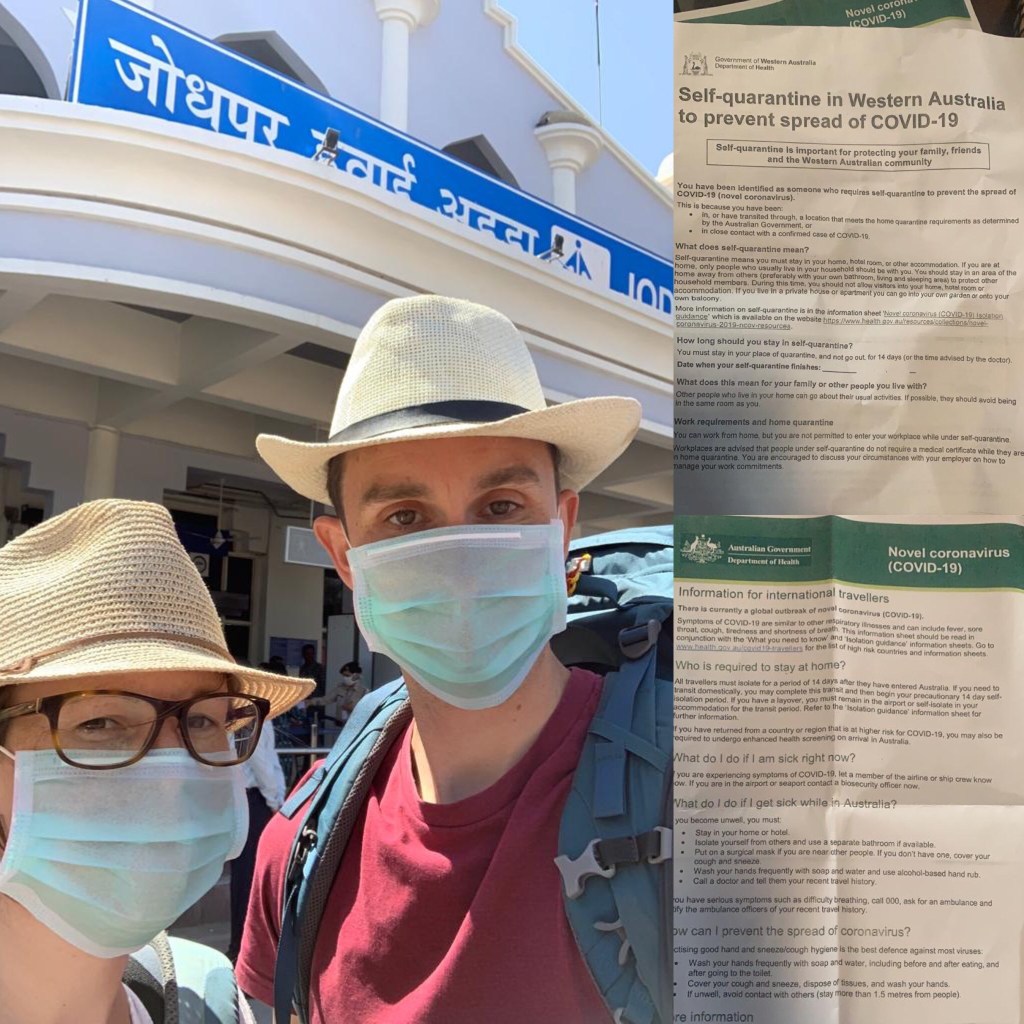
We’re very glad we left India when we did and after three flights we arrived in Perth, Australia. We were met by hazmat suits and quarantine information.

Marks weight loss in India 2.5kg (we didn’t weigh lizzie – on looking some but less than mark).

Book club of the week A Fine Balance by Rohinton Mistry. A beautiful, but completely devastating story of how four people’s lives intersect during the ‘political emergency’ in India during the 1970’s. Life becomes a ‘fine balance’ between hope and despair. This is a powerful and thought provoking book, with wonderful descriptions and well developed characters. By far the best book we have read set in India and we would throughly recommend it. Be prepared to be moved and have a light-hearted chaser to follow.

Highlights this week:
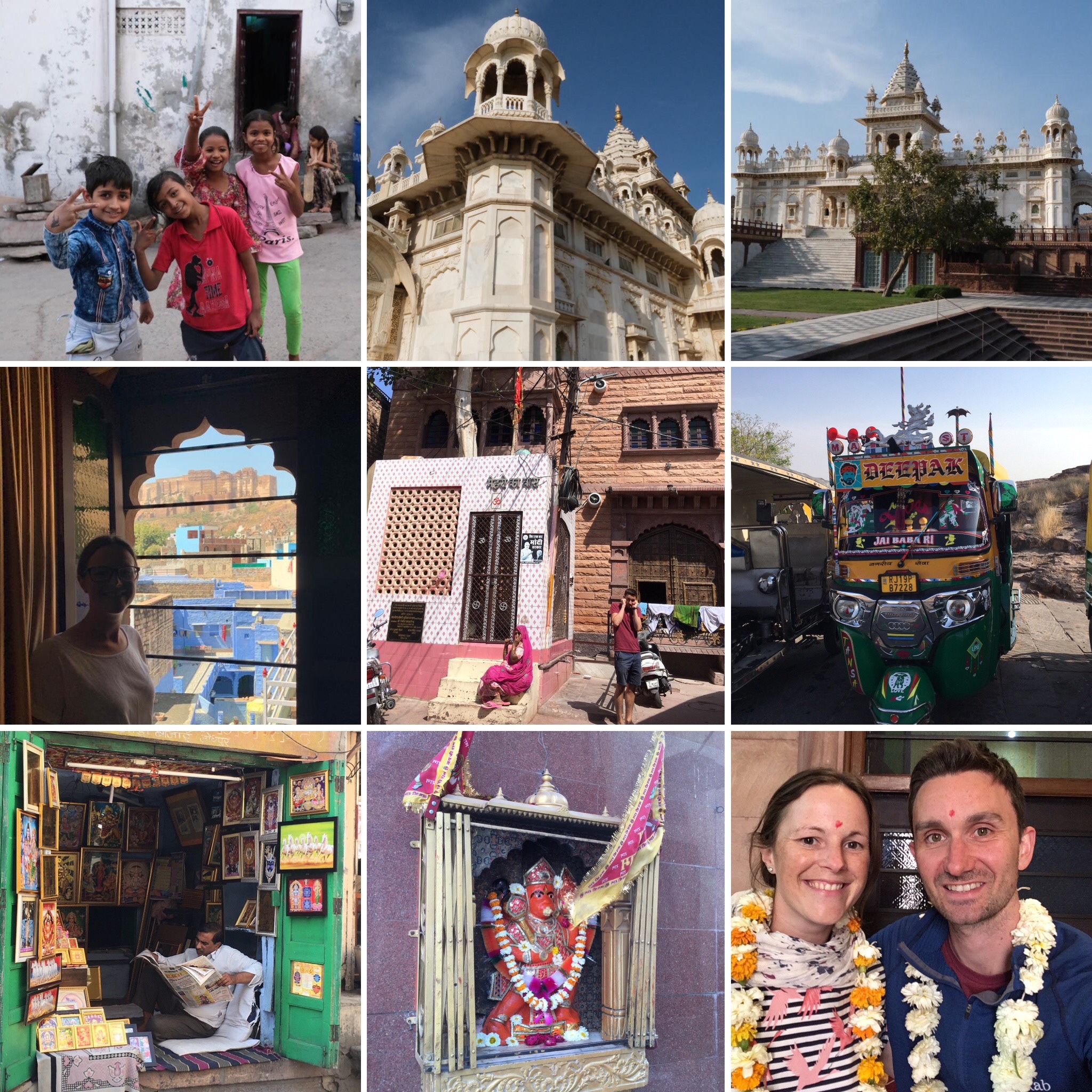
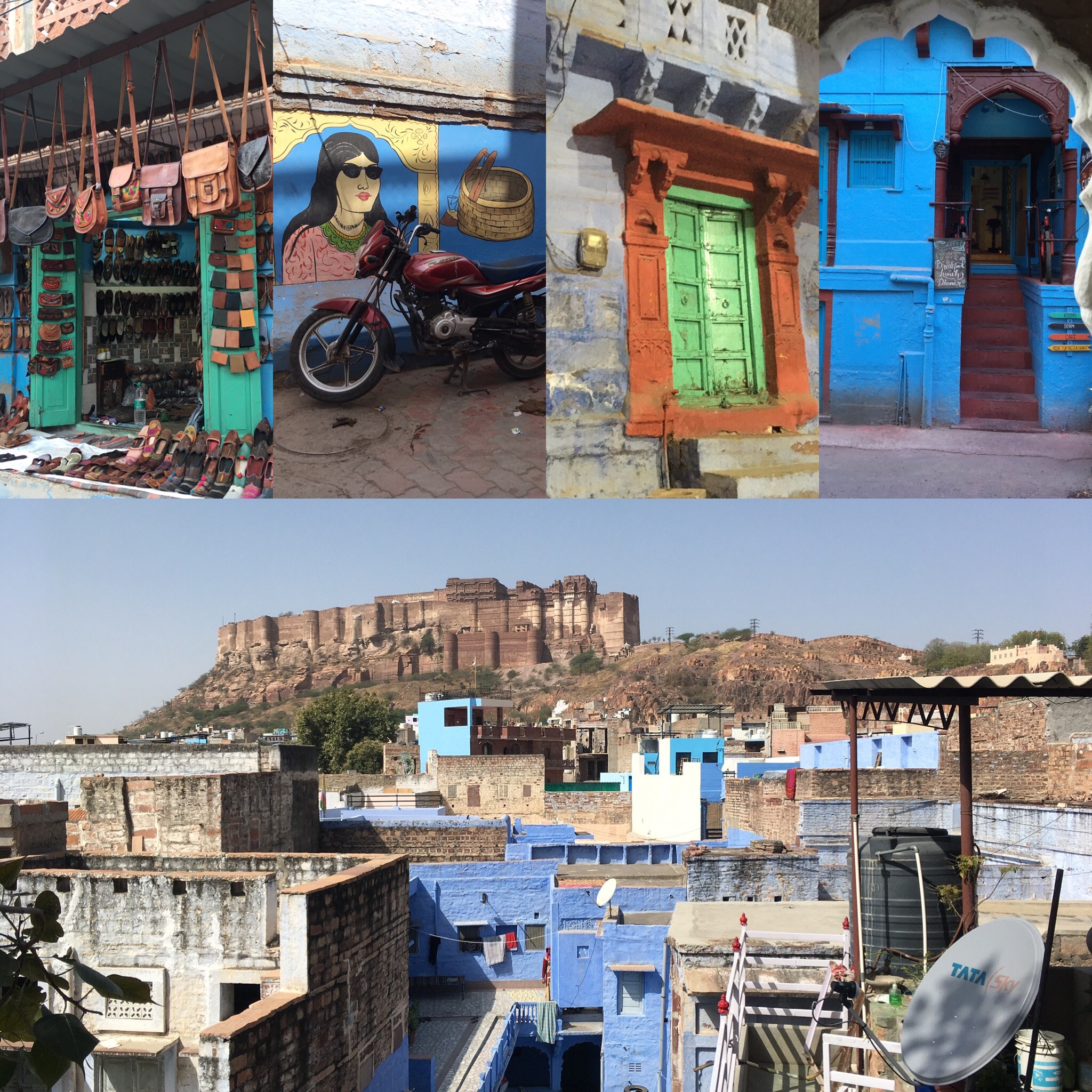
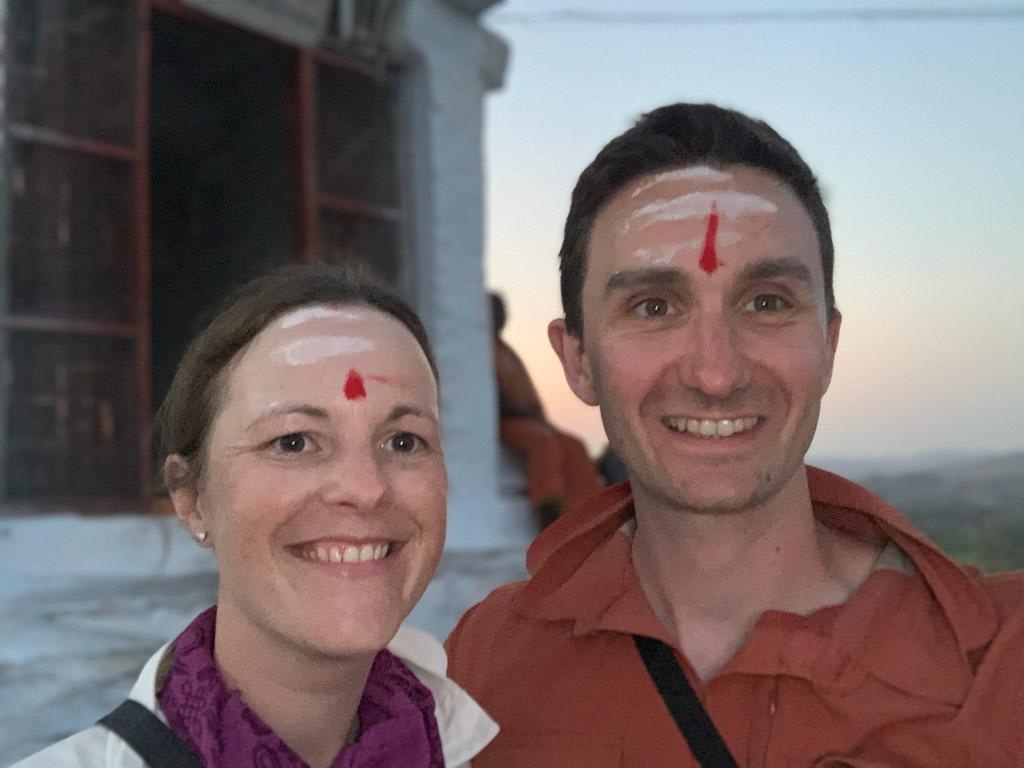
1.Wonderful Indian Madness – It’s hard to believe that we were in Jodhpur at the beginning of this week. The middle pictures show Lizzie at the bedroom window of our homestay with views directly up to the fort and Mark outside the place sheltering his ears from the noisy Hindu temple which started worship at 5am every morning (we naively thought that Hinduism was similar to Buddhism before coming to India). We spent our last day wandering Jodhpurs’ blue streets, doing a bit of shopping and seeing Jaswany Thada (a memorial ground to the royal family). As we left India we reflected on how bonkers the last 8 weeks had been. It is a completely exhausting and wonderfully mad country. There is constant sound (music, car horns and people), smells (not all pleasant) and colour. Our hosts were warm, greeting us with a flower garland, involving us in their birthday celebrations and feeding us local delicacies. Yet, at the time of leaving, the Indians we met were completely blase about coronavirus,as though India was special and wouldn’t be affected, who can blame them when the press and government release constant positive messages that things are under control.
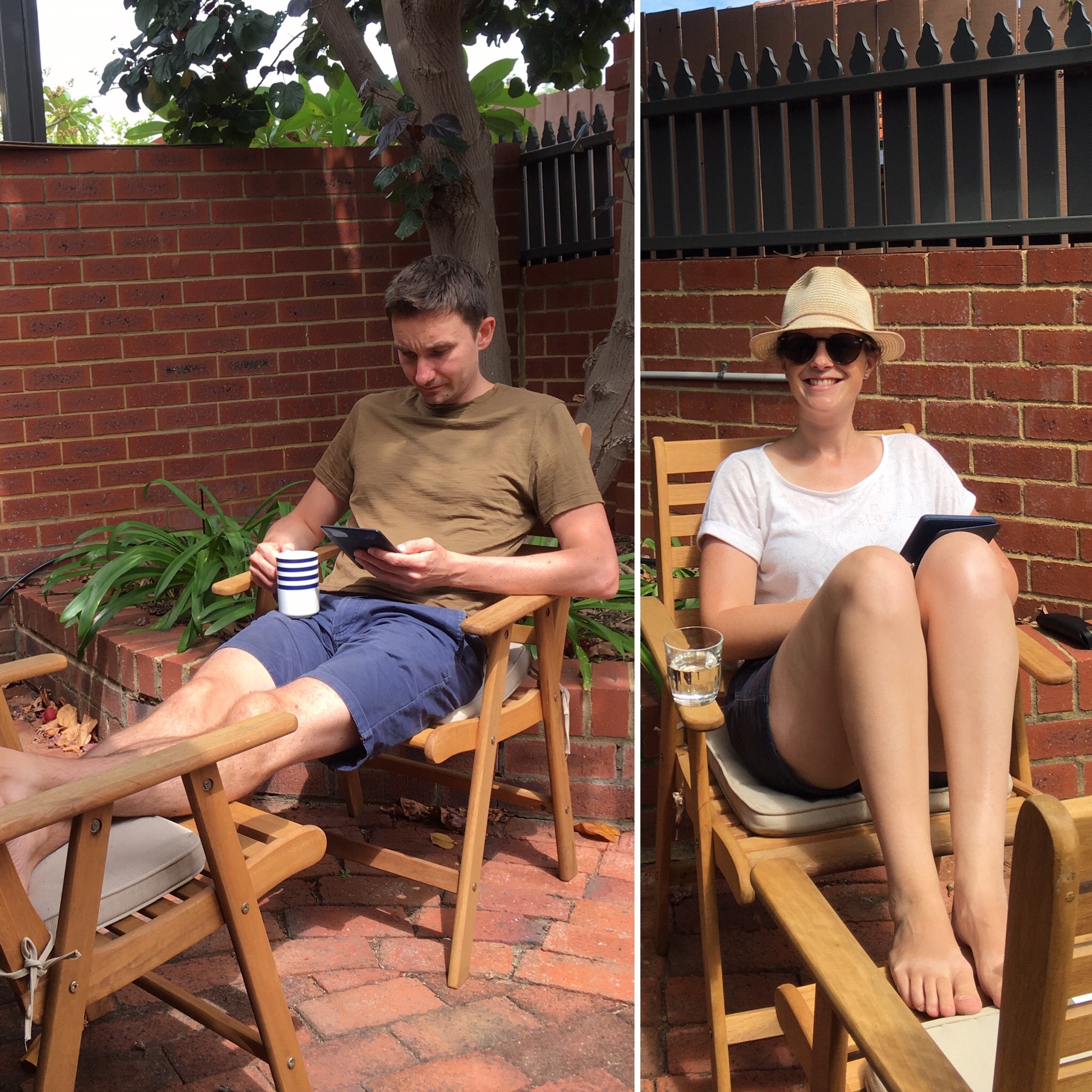
2.Australian humour. If you’re going to be anywhere in the world during an international disaster it’s nice to be somewhere with a light heart and a good sense of humour. We have certainly laughed out loud to their radio shows this week.

We had hoped to isolate in a campervan up the west coast, but with state guidance requiring 14 days of isolation and concern about not being able to get fuel/food, we’re now holed up in an airbnb in Freemantle, Perth. We have sun and some outdoor space, just a shame we don’t still have our bat and ball.
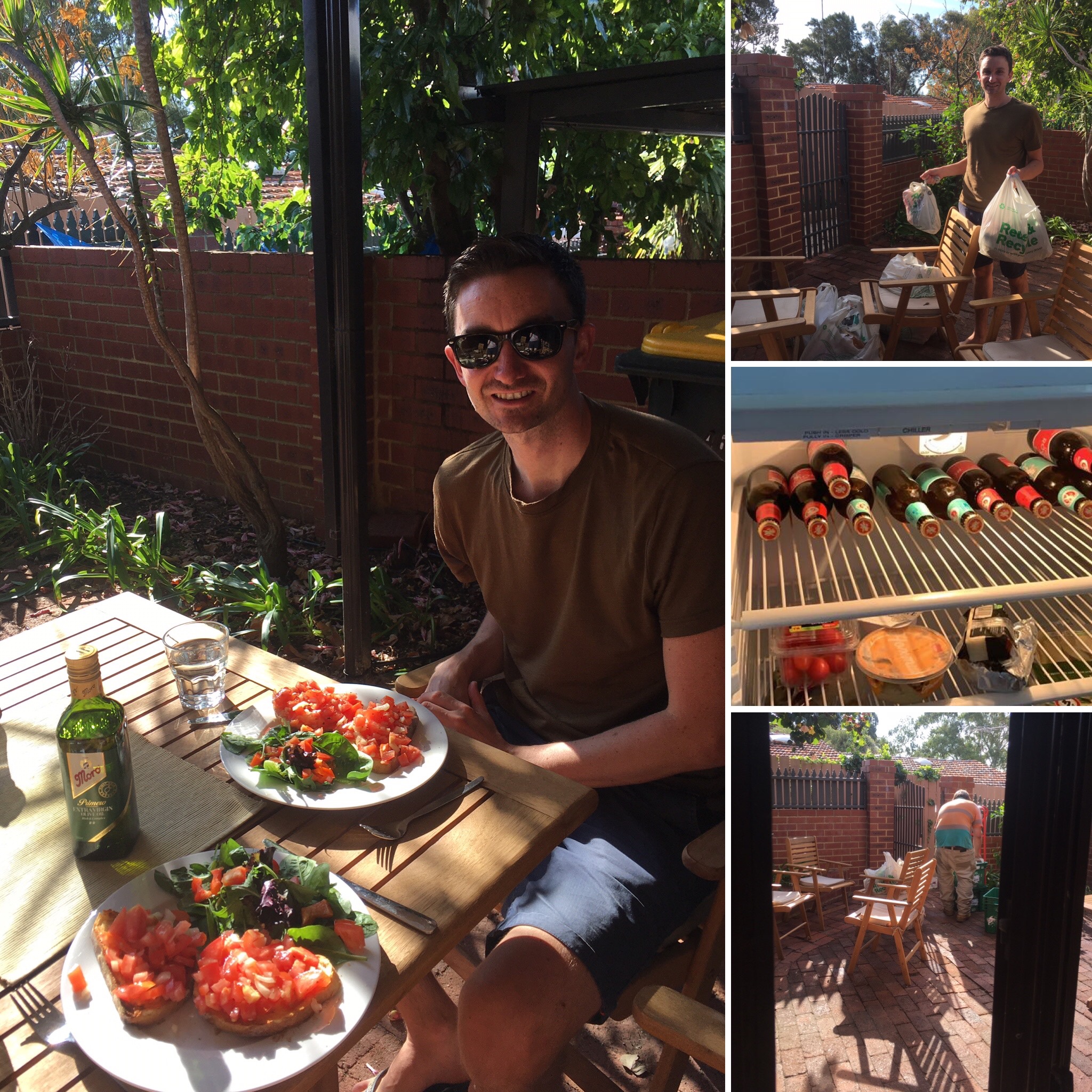
3.Beer, wine and food to the door. We might not be allowed out of the house but we’re not complaining (very aware that many others are in similar situations). Australia has it’s priorities in order, we were able to get a door to door beer and wine delivery within 1.5hours, unfortunately food took us 48 hours (as we needed prior approval that we were self isolating). Having lived off vegetarian curries for the last 8 weeks it has been refreshing to cook for ourselves and we’re enjoying fresh fruit, veg and meat.
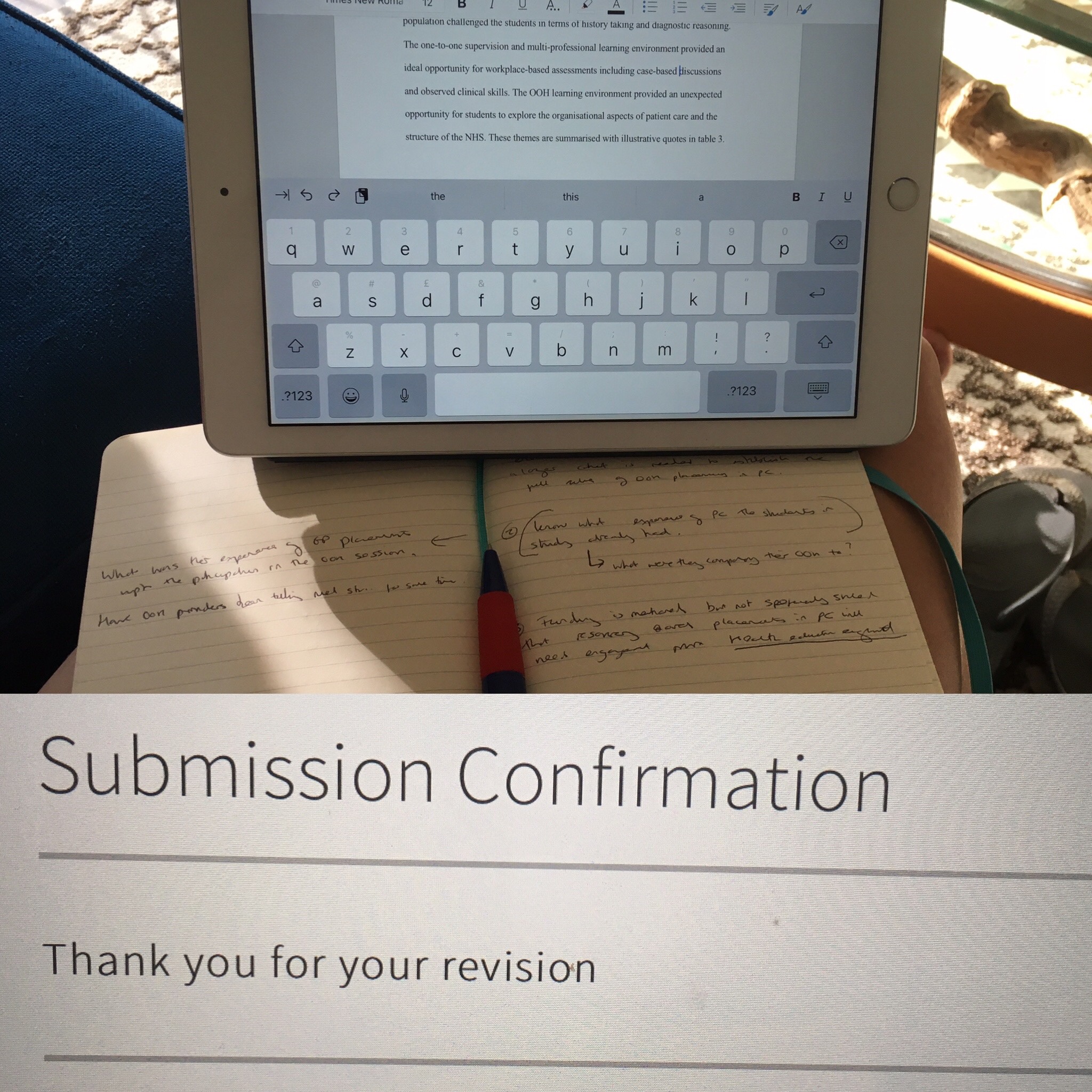
4.Paper accepted and revisions done. Mark was able to sort out internet to his iPad which meant Lizzie was able to finish some changes to a paper she had accepted. Our place doesn’t have wifi, although luckily we changed to three before coming away which allows us to use free international roaming and unlimited UK calls, so if anyone wants a chat just let us know.
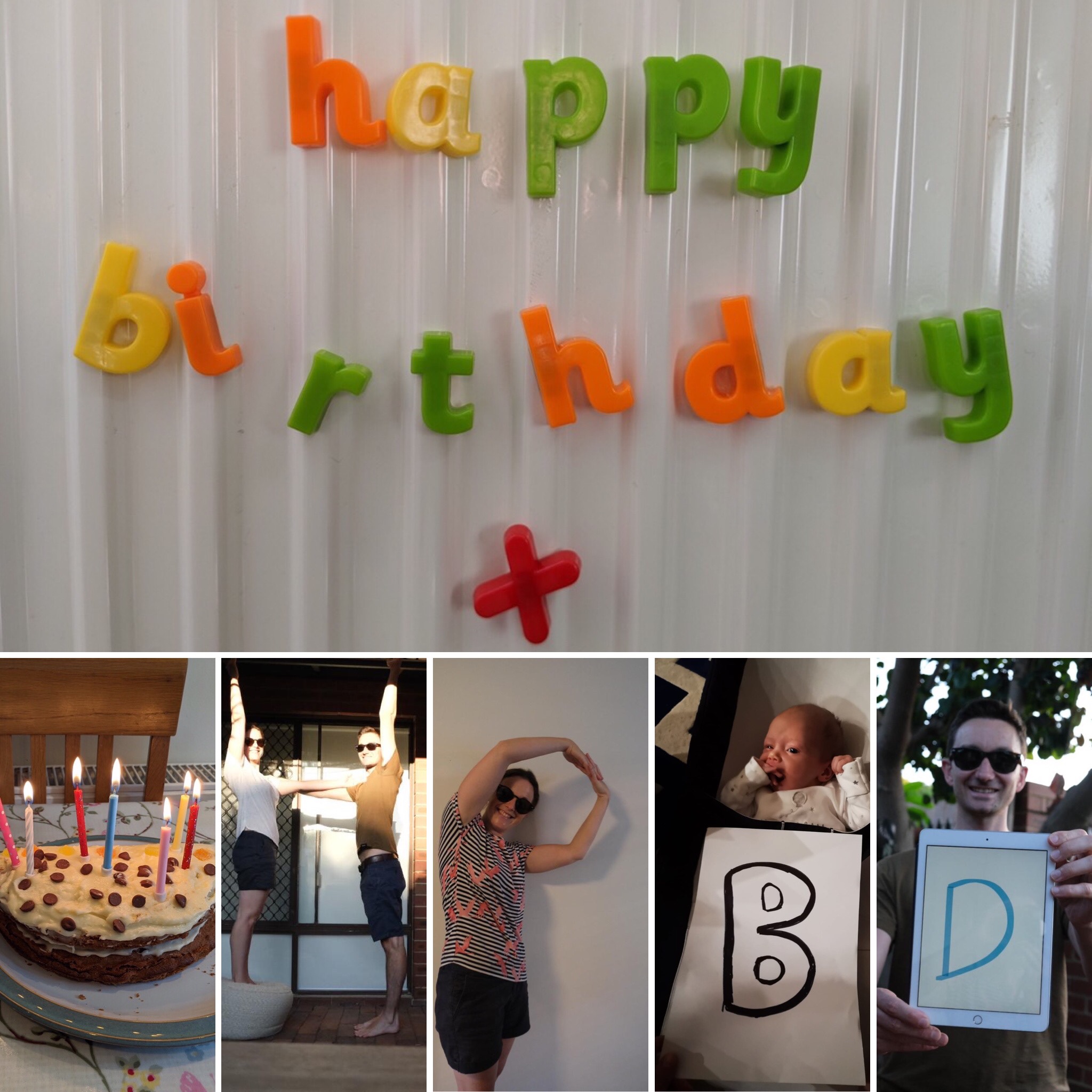
5. Creating a trans-continental video for Lizzie’s dads 70th birthday – Ironically Lizzie was going to surprise her dad in Melbourne flying two days after we actually ended up leaving India. We didn’t let a bit of isolation stop celebrations and we created a collaborative video with the help of Mrs Lizzie Grove, with personal messages, cake and spelling out happy birthday, even 4 week old Millie got involved.

A final thought…When life gives you lemons try and make a gin and tonic! This may not be how we’d planned to spend our sabbatical, but I’m sure this is not what Lizzie’s friends and colleagues in health care were wanting or what Mark’s friends and colleagues in the airline industry had hoped for. Times are going to be testing for all of us, so all we can do is be kind, be sensible and listen to government advice.

It looks as though we’re going to be staying put in Perth for the next few months. It’s not a time to be travelling, we can’t risk spreading this around and we can’t put pressure on already strained systems. We had looked to coming back to the UK so lizzie can work but with Singapore and Hong Kong closing to transit this is looking impossible (despite latest foreign office advice). We would like to get to Melbourne to see Lizzie’s family, and this may be possible, but again we have to be sensible with boarder restrictions and isolation (Lizzie’s parents are in the high risk group).

We are aware that so many people are in much trickier situations than us, be it with pre-existing physical or mental health conditions, juggling work and children at home, the stress of a small business etc. So at this time of uncertainty for us all we’re keeping positive by thinking of what we are grateful for:

1. Friends and Family, who are sensibly and kindly self-isolating already.

2. Technology, allowing us to stay connected with 1. and receive home deliveries.

3.Sunshine, we can’t go for a walk or leave our place (even though the sea is just 5 minutes away) but we can sit in the sun and that’s good for the soul.

4. Excellent healthcare, having come from India we are so greatful to be somewhere where we can drink the water and has excellent health provision. We are acutely aware of all the hard work health care workers are doing right now and we have full respect for all the health care workers and allied staff.

5. Each other.

I’m not sure we’ll keep the blog going whilst in isolation as it might get rather dull, although as Mark says “isolation is like we’re the last two in the big brother house” so we better keep it entertaining. Please do send us your book or film recommendations. All our love and best wishes.x
Week 8: Udaipur to Jodhpur

This week has been all about Indian celebrations…Happy Holi…and Coronavirus.

Distance covered 250km: Average daily steps 7534, Tuktuks 2, Buses 1.

Average spend per day £50.

Most switches in a single room: 17. Running backgammon score Mark 7, Lizzie 4.

Book of the week, The Lincoln Lawyer by Michael Connelly. An enjoyable book to read with a good story line and fast-paced. A little predictable at times but will look forward to reading more in the series.

Highlights this week include:

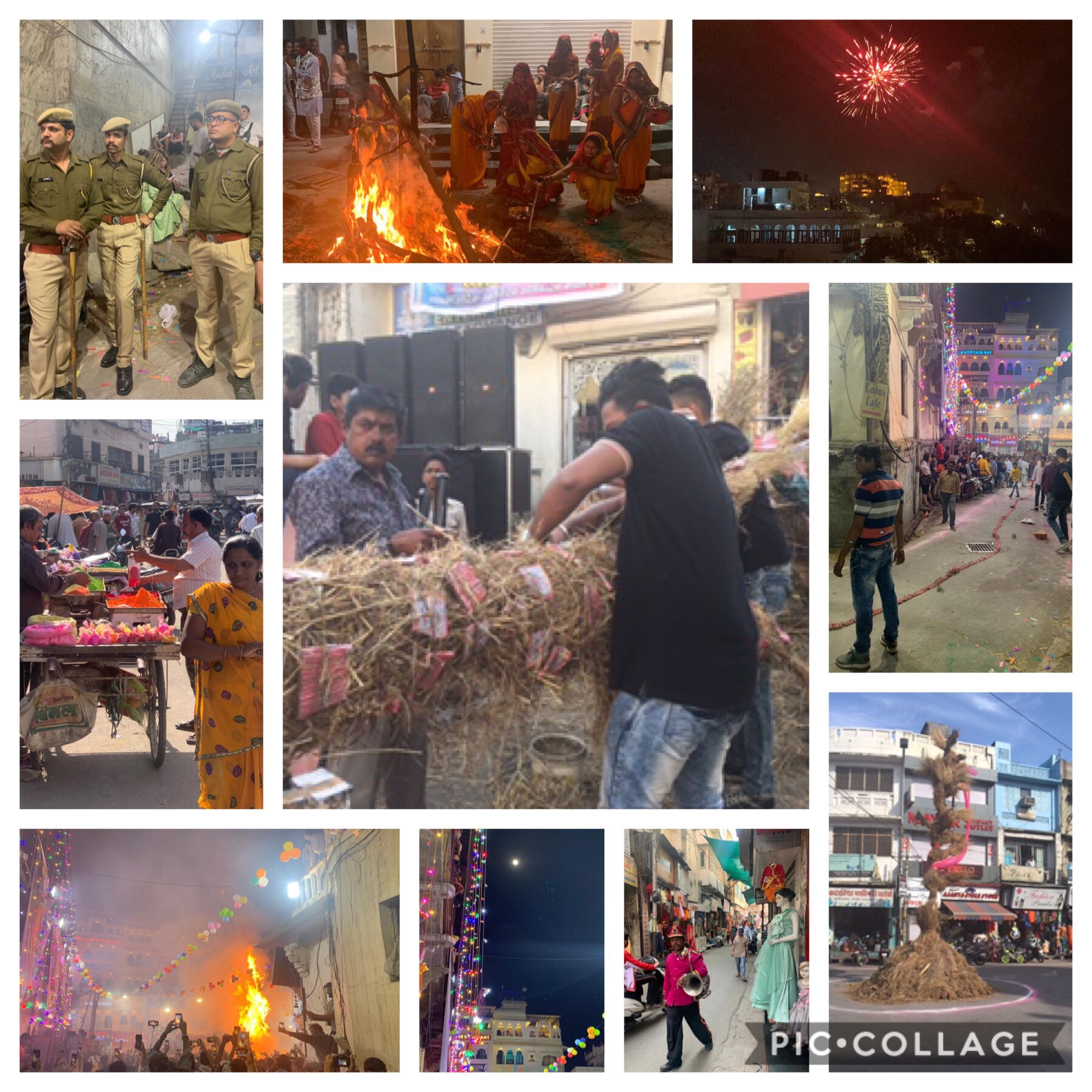
1.Holika Dahan – The day before Holi, where locals burn bonfires to celebrate the triumph of good over evil and the beginning of spring. In true Indian style the pyres are erected directly into the road through a newly dug hole and lined with fire crackers. During the day we enjoyed watching the pyres being erected, with cow dug patties at the base for extra fuel (cow dug is used a lot as a fuel and you see circular dung patties drying everywhere). We bought some colourful powder ready for Holi and found a lovely roof top spot for dinner to watch the fireworks over the Palace. After dinner we joined the crowds watching individual street pyres being lit and the local ladies offering the ashes grain, before heading up to the main temple square. As expected the main event was bonkers with loud music, traditional dance with a modern twist, fire crackers down the street up to a huge central fire. We learnt the next day that a lot of the internet was down as the bonfires had burnt through overhead wires in the streets.

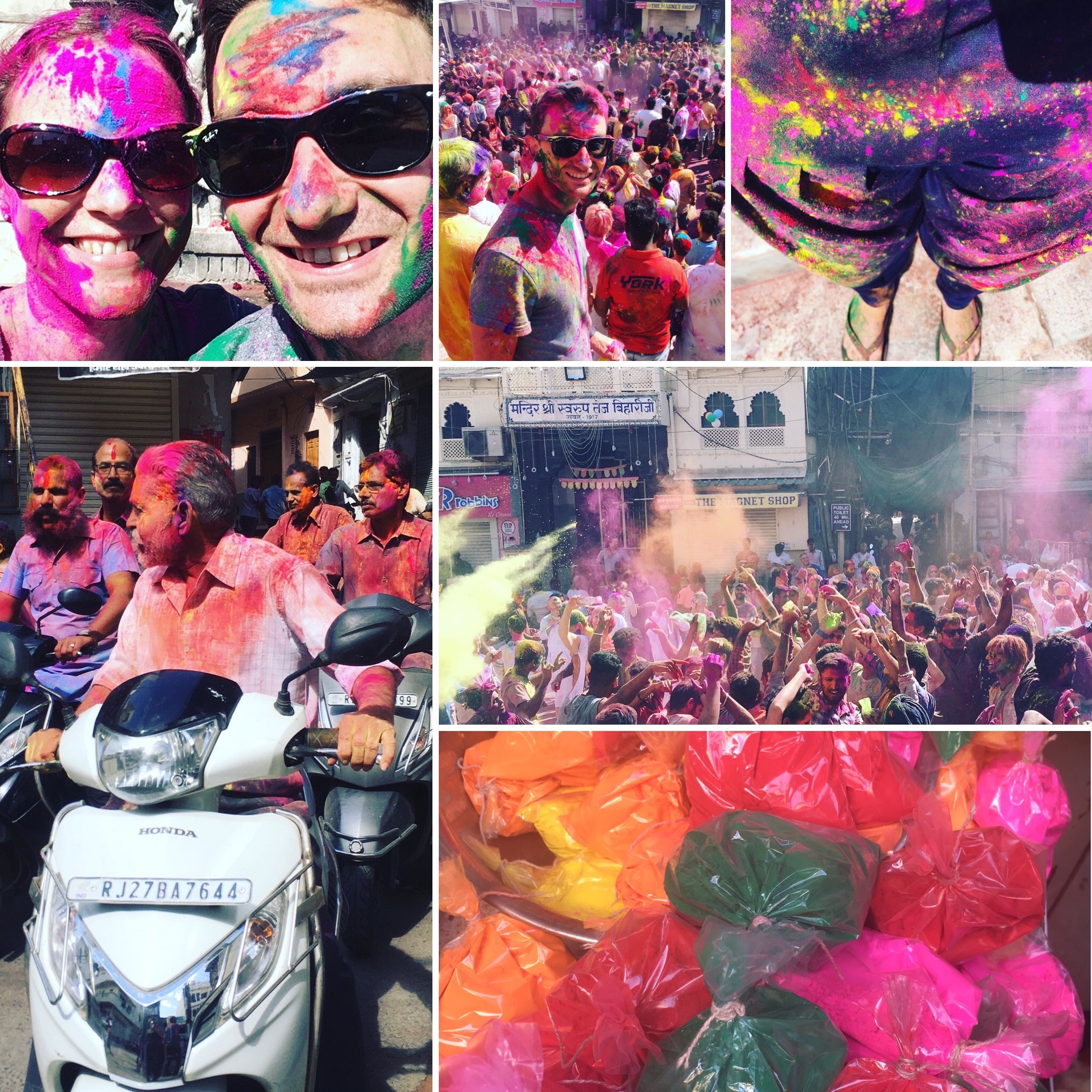
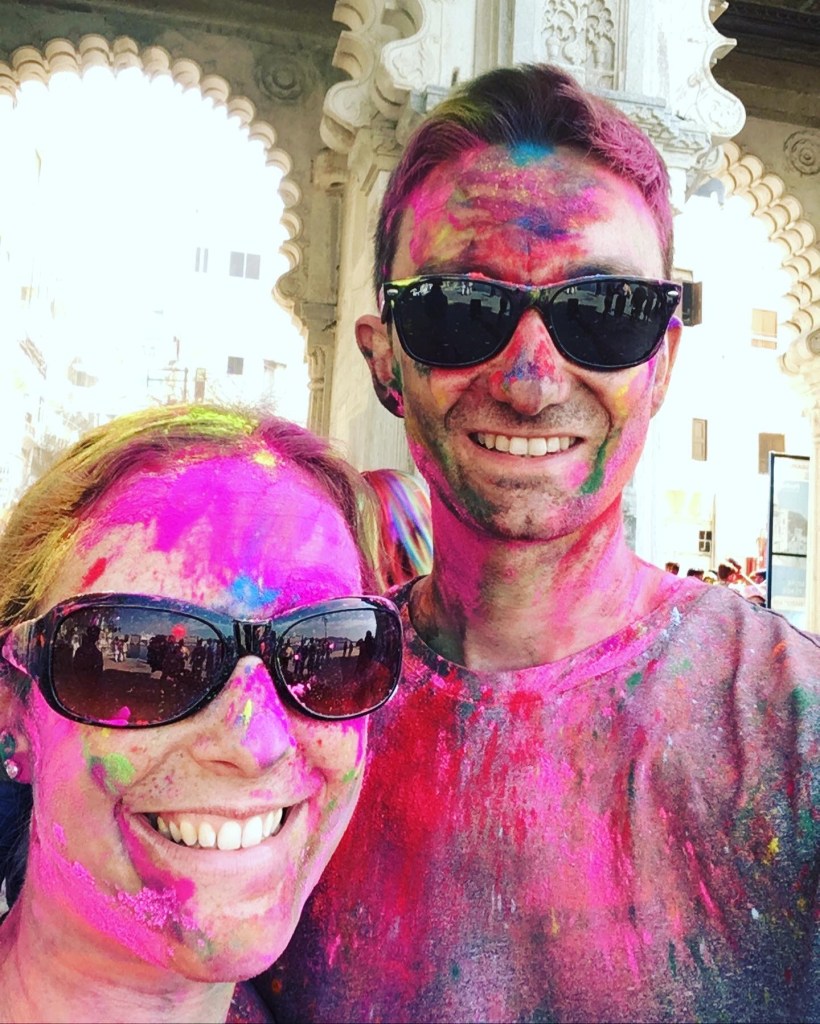
2.Holi. One of the main events on the Indian festival Calendar, popularly known as the ‘festival of colours / love / spring’ celebrating the arrival of spring. In Udaipur this meant people in the streets greeting you with ‘happy Holi’ and placing colour on your face and then a hug. We enjoyed joining in with the celebrations by the main temple with music, drumming and a lot of colour. As we tried to walk around more the younger children have water bombs, buckets and water pistols trying to fix the colour by getting you wet, we were less enthused by this bit and re-treated back to our accomodation to join the rest other westerners watching it all unfold from our roof-top restaurant. Turns out the afternoon becomes a rather boozy affair (not for us) as the guest house father was very merry on whisky which he was sharing around. The streets become full of little parties with individual sound systems and people dancing, drinking and taking the local drug Bhang.
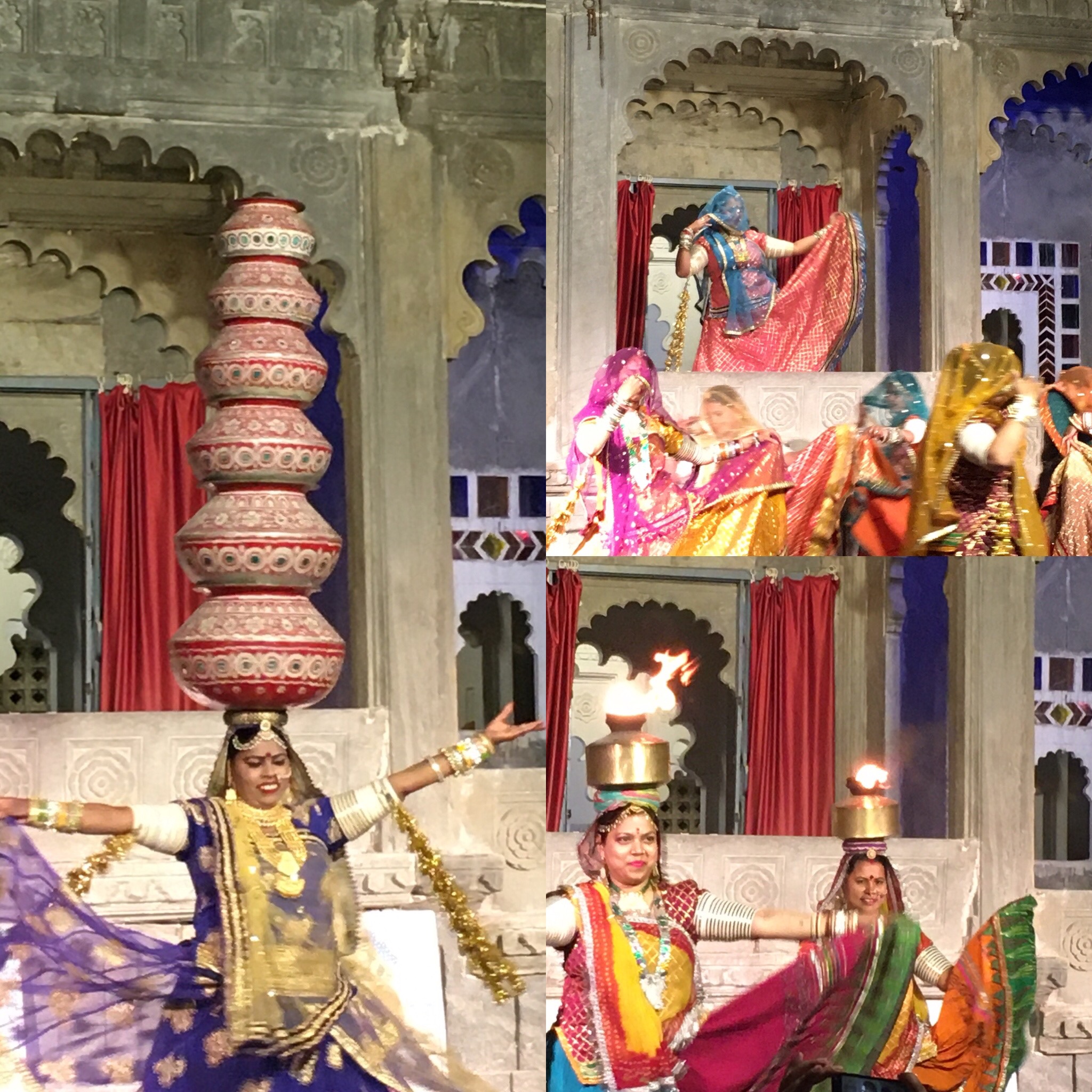
3.Rajistan traditional dance and puppet show. A lively evening at Bagore Ki Haveli in Udaipur. We loved the music and watching various dancers and puppeteers. The highlight was a lady twizzeling around with 8 pots on her head whilst standing on the rim of a dish, madness.

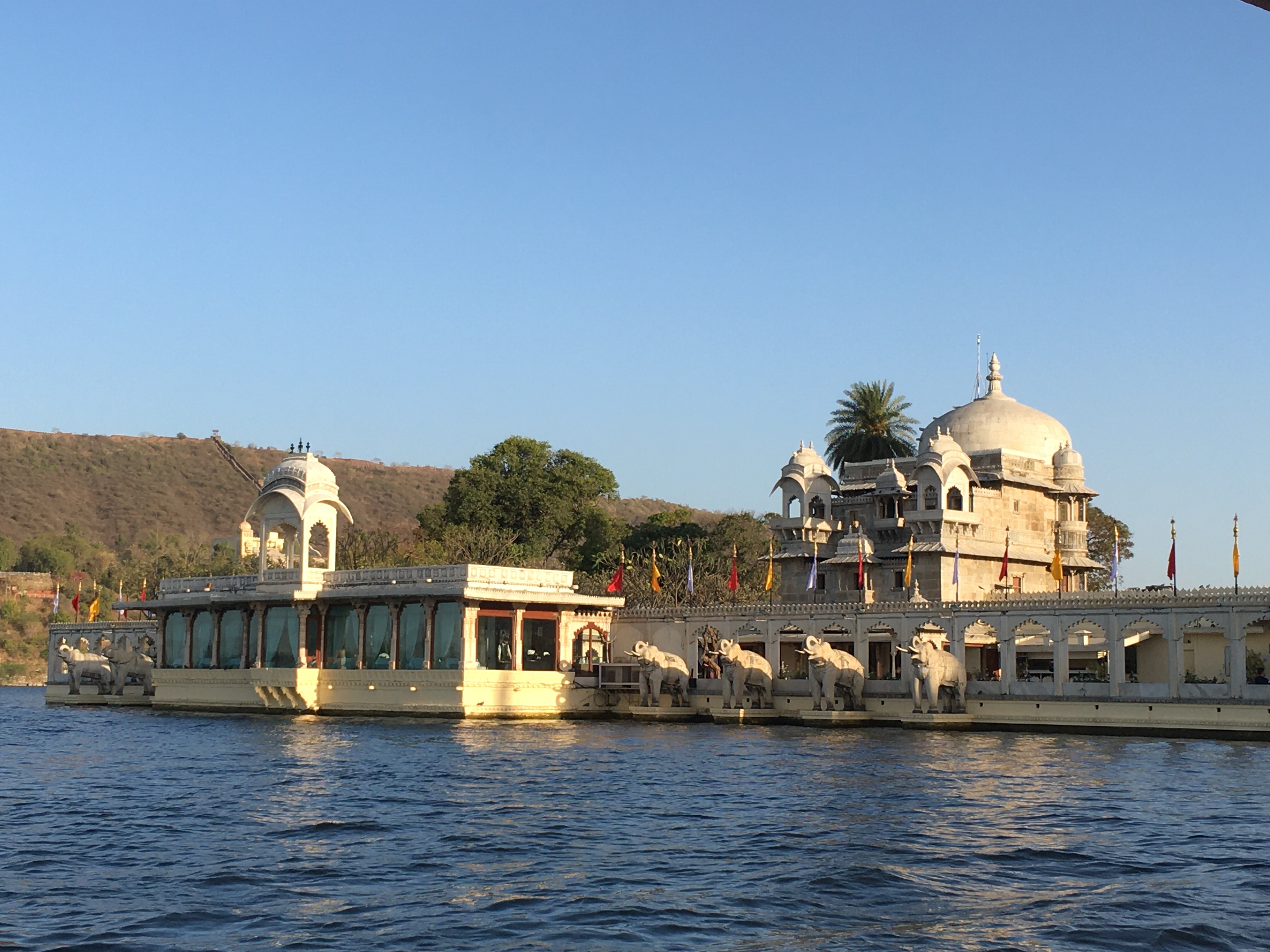
4.Palaces. Udaipur is known as the city of lakes, but it also had many Palaces. We had a lovely morning wandering around the beautiful city palace, but even better the following day we hopped on a boat to the garden palace at Jagmandir Island. A Canadian couple had given us a tip that the ride is cheaper if you go before 13:00 and you can spend all day there getting the sun-set boat back. This palace is truly relaxing, no traffic, just one restaurant / bar and lots of places for us to sit, read and contemplate the corona situation. We learnt that the James Bond film Octapussy was set around this island and so watch it on the bus journey the following day. It’s very dated, sexist and terrible acting, but nice to see so much of Udaipur.

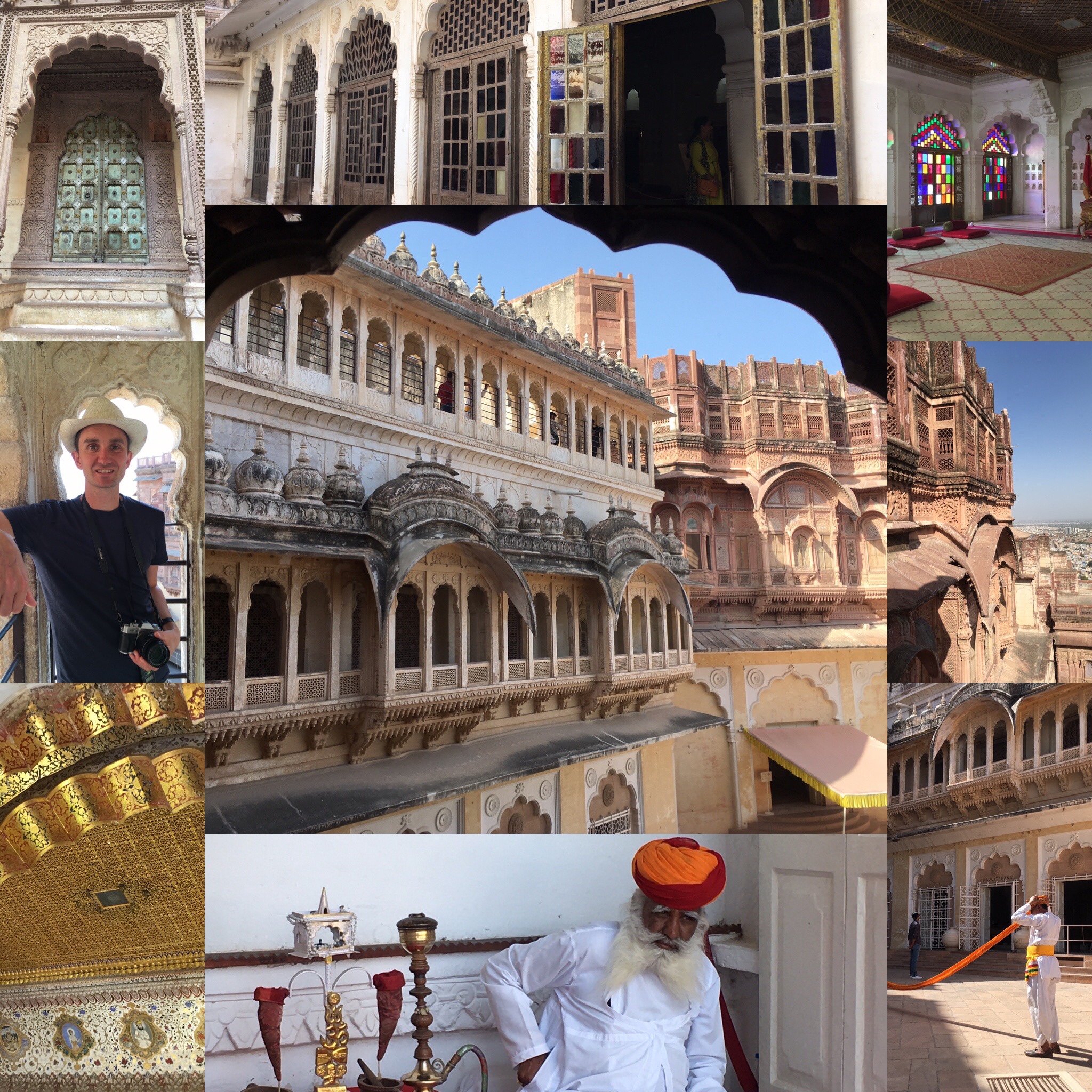
5. Jodhpur Fort. There is no denying that the red sandstone fort in Jodhpur is fantastic. It towers above the city and provides wonderful views of the city walls and the blue houses below. It has been carefully restored under the trust set up by the current king and has a brilliant audio guide to take you around. You can see a fantastic collection of palanquins (a covered person carrier) including one used in England to transport the then Jodhpur queen between her Royals Royce and English venues. We learnt that riding Jodhpurs are so called as they were adapted from traditional clothing of the Jodhpur polo riders and admired by the victorians.

6.Wandering the lanes of the blue city of Jodhpur. Jodhpur has a lovely feel, it’s a haven of narrow winding lanes, with lots of normal life going on and some beautiful areas of restoration. We can certainly see why it’s known as the ‘blue city’ with numerous houses a lovely blue colour. It’s not agreed why the houses are blue, whether it be for caste reasons or to defend against termites, but either way it looks impressive from the fort when you get a panoramic vista of the city. We’re going to have a final day wandering and shopping before leaving tomorrow.

A final thought…Coronavirus! As for so many right now coronavirus has been at the forefront of our minds. It struck us as we had paint slapped on our faces and hugs from complete strangers that Holi was not ideal given the current situation. We are concerned about coronavirus, not so much for ourselves, as we’re supposedly in the low risk group, but more as vectors travelling around this crowded country. It does worry us that we’re travelling and unfortunately India is more renowned for spitting, close contact and eating with hands, than it is for it’s general hygiene.

The Indian government would lead us to believe that the situation is very much under control. Only 84 cases, but they have only tested around 5000 people (only high risk travel history or contacts) and the situation worldwide would lead us to believe that there are many more undetected cases. We have been following the situation closely and after lots of discussion both together and with our families (thank you) we have made the decision to leave India (for now). We are going to self-isolate on the west coast of Australia.

We hope that Modi’s forecasts is correct and India will have this under control in 15 days, the IPL will start in April and we’ll be back. However, we’re realistic, we think this does need to be taken seriously and we’re concerned about boarders closing. Being in a country where we can’t drink the tap water isn’t ideal if we need to self isolate and we’d hate to infect any of our homestay families or elderly people on public transport. It is tricky to know what to do for the best, we had thought about going to an ashram retreat for a month, but we don’t think this is short-lasting. The Nepalese boarder is closed and individual states in India are beginning to restrict movement. It is with a head full of sound and colour that we leave to Australia on Monday (boarders permitting)… We hope to keep up the blog, so watch this space.

We hope that you are all well in this unprecedented time and our thoughts are particularly with everyone working hard back in the UK to protect others.

Week 7: Mumbai to Udaipur (Via Nashik, Aurangabad and Ahmedabad)

After exploring Mumbai we headed to wine and temple country (not a usual combination). Using plane, train and buses this week to move across three states – Maharashtra, Gujarat (one of only two dry states) and Rajasthan.

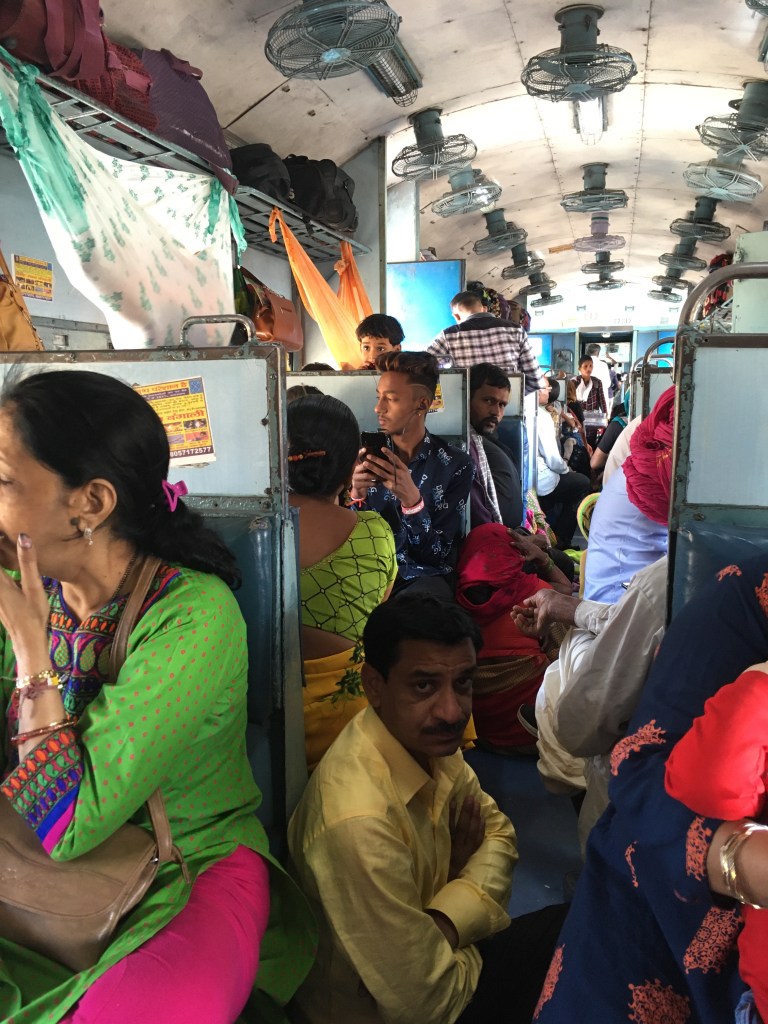
Packed train to Aurangabad, note the children sleeping in their window ‘hammocks’.

Distance covered 1645km: Average daily steps 13,032, Tuktuks 7, Taxis 2, Buses 2, Trains 5, Flights 1.

Average spend per day £60 (mainly due to flight).

Most people on one moped 5, people seen spitting in one day 23 (including one in bus).

Book this week State of wonder by Ann Patchett. I had heard good things about this author so choose this one – medical researcher heads to the Amazon to uncover many secrets. Easy, enjoyable read with good prose. Refreshing from last weeks book and hard to put down towards the end. Unfortunately, I felt the story line was weak and unbelievable at times which let it down, overall 3/5.

Highlights this week include:

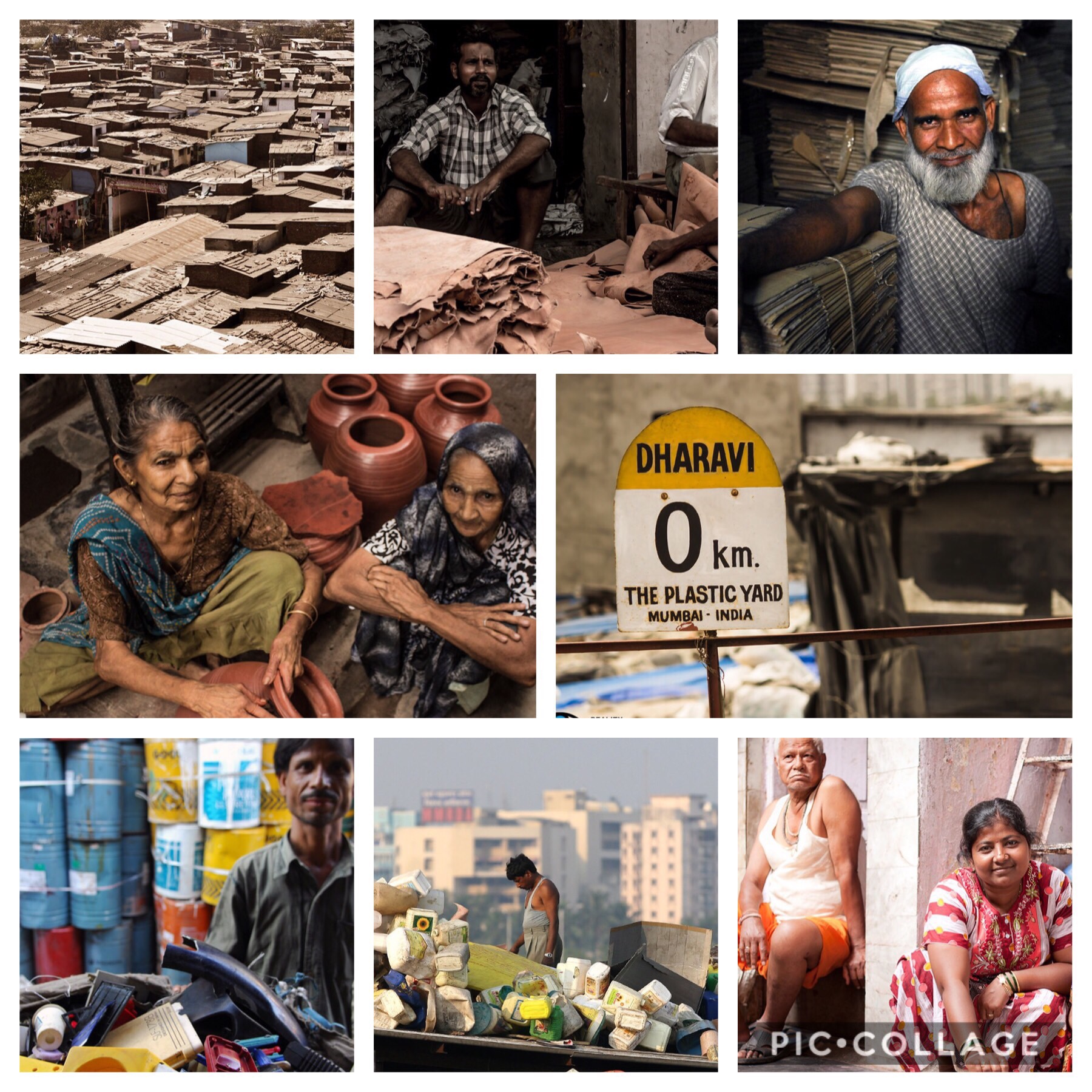
1. Dharavi slum tour. We were in two minds about going on this tour, but good reviews convinced us to go with reality tours and we were glad we did. Reality tours are a social enterprise where the guides live in the slum and 80% of the ticket cost goes back into their NGO to support education, employment and empowerment of women. Our preconceptions of a slum were certainly changed, pretty important given that 60% of Mumbai’s population are reported to live in slums.

Dhavari is the biggest reported slum in India with a population of over 1 million. It was the site for shooting slumdog millionaire, something they don’t talk about. However, apparently as of 2014 it’s strictly not a slum as the housing is now legally recognised by the government and formal infrastructure (water and sanitation) are now present. It was remarkable that despite very cramped living conditions (most houses are 10ft x 10ft for an average of 6 people, essentially one room and no running water, just public baths), there is no real smell and lots of micro-industry. Dhavari plays a big part in plastic recycling, we saw sorting of numerous items and turning into small plastic pellets. There were tanneries, pottery areas and popadom making. Apparently industry from the slum itself turns over almost $700million per year. There is now a drive from the government to re-house people in new apartment blocks to improve living conditions, but the locals are resisting as many are 4th generation there and reportedly like the community and location (next to two major train stations and on prime real estate in Mumbai).

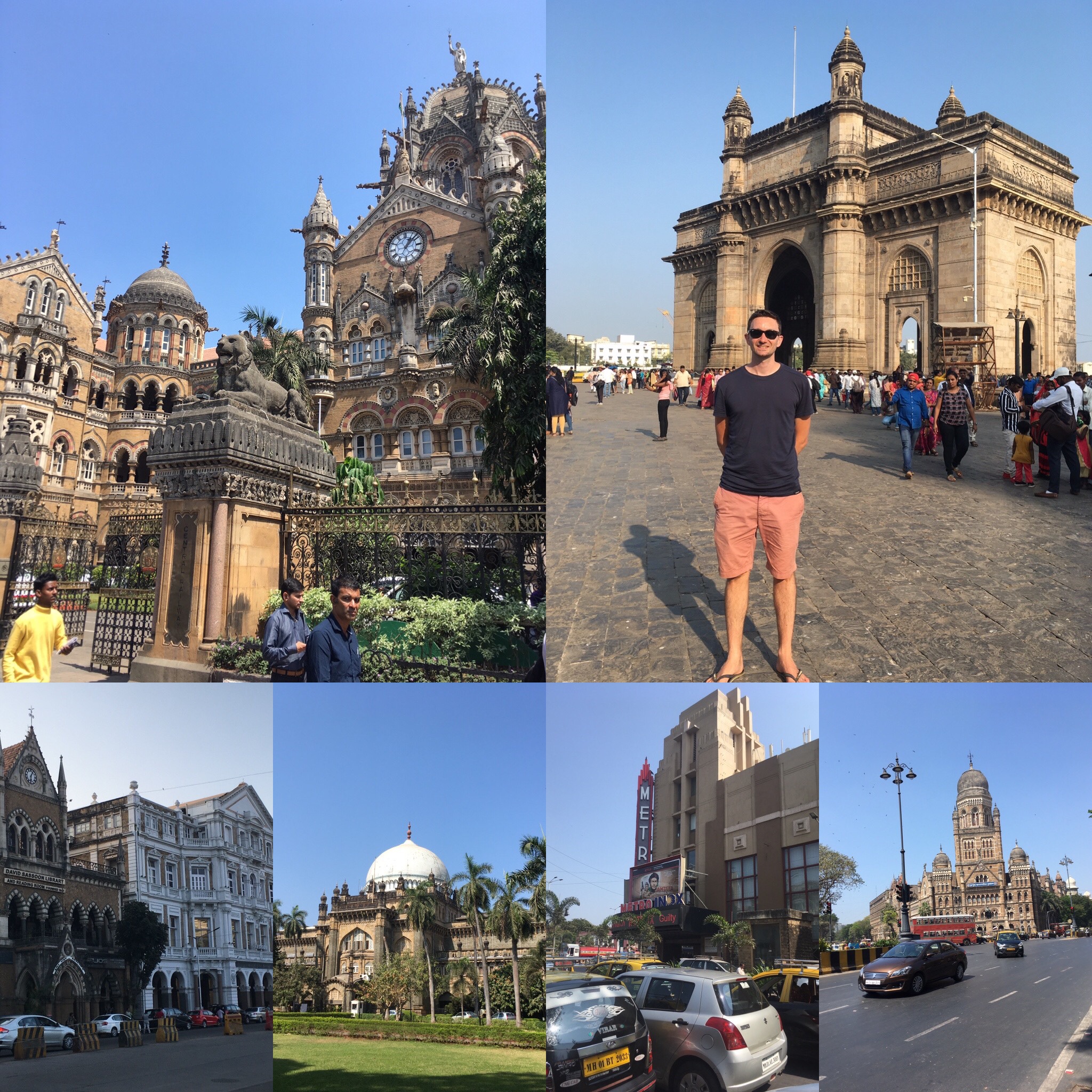
2.Walking around the architecture of Mumbai. We walked tens of thousands of steps around Mumbai’s streets enjoying the varied architecture and food. Many buildings (including the UNESCO railway building, post office and gateway to India) remain from the colonial era, but there is also a nice blend of Indo-Saracenic architecture and art-deco buildings. Indeed Mumbai has the second largest number of art-deco building in the world which we enjoyed along Marine drive (second to Miami).

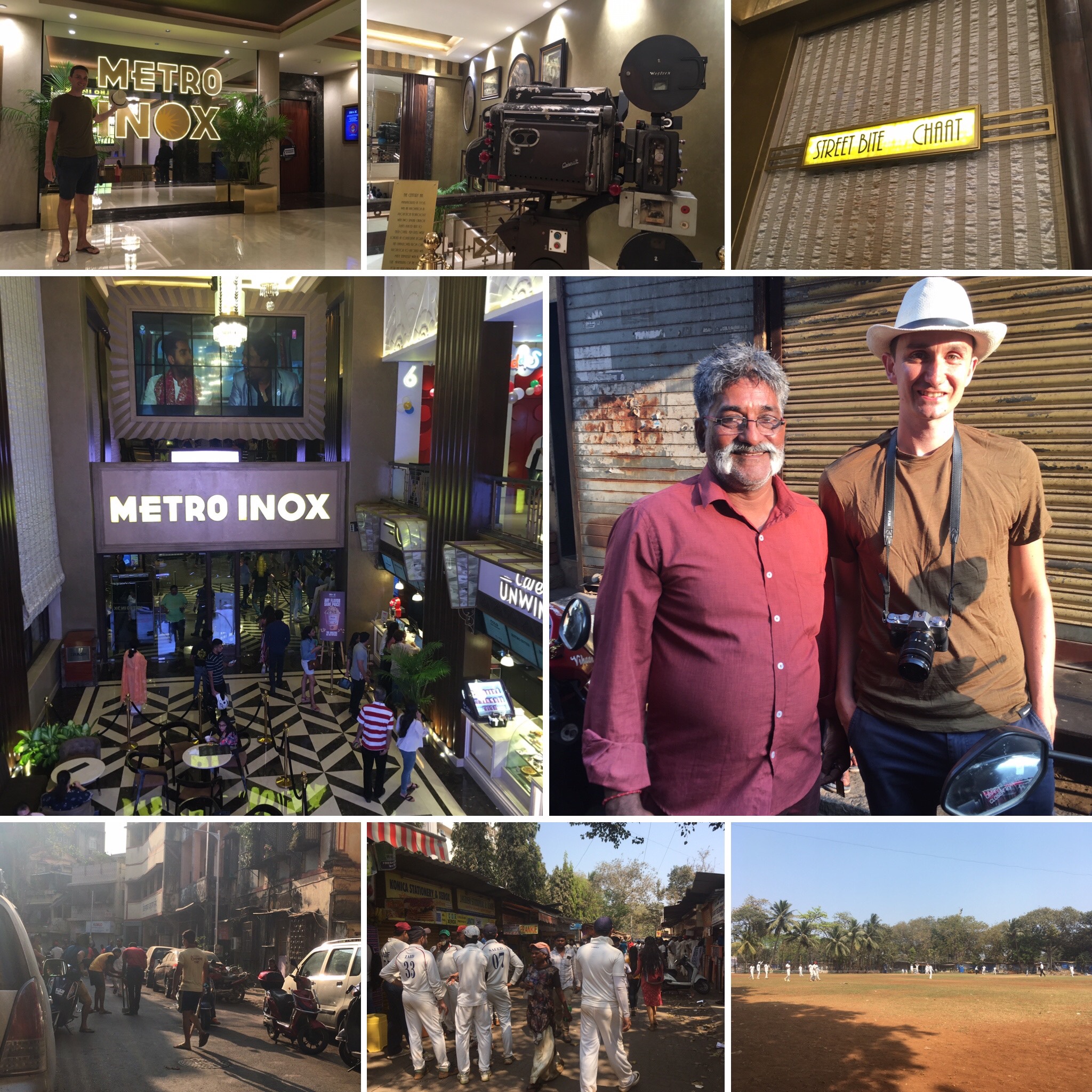
3.Cricket and Cinema in Mumbai. The two most prominent activities in Mumbai are filming (mainly music videos) and cricket. We enjoyed watching both. There is no doubt about it, cricket is the national sport and they play it everywhere!We had a nice interlude to walking around the city to join the locals in watching 6 overs of a 20:20. Mark got invited to join in with a street cricket match, but we had a date with the cinema. Cinema is big in Mumbai,it’s home of Bollywood and many of the cinemas are in beautiful art-deco buildings. We had wanted to watch a Bollywood blockbuster,but they were all in Hindi so we settled for The Oscar winning “Parasite”, which we both enjoyed. We enjoyed an intermission and saw that the cinema is no exemption to the Indians love of their mobile phone.

4.Vineyards.Nashik is a beautiful Hindu pilgrimage town in itself, but the surrounding area is the biggest wine region in India. We decided to spend three lovely days in a homestay so we could enjoy both. As a wine region it’s much higher than Mumbai (in fact it used to be a hill station) so the weather was so much nicer (fresh and not muggy). A thirty minute tuk-tuk ride out of Nasik on dirt tracks we arrived at Soma vineyard. We decided to walk between three vineyards closely situated to each other. Soma vineyard is a new boutique vineyard set up by a wealthy Indian man and only started bottling in 2014. We had a tour and tasting before moving on to the smarter York tasting rooms. We ended in the vibrant Sula vineyard which dominates the indian wine market (60% market share, in fact the main variety seen on restaurant wine lists, if they have one). Unsurprisingly indian wine tastes are sweeter than ours and they deliberately produce wines for both western (early harvest) and Indian palates (late harvest grapes). Soma has even developed a sweet Zinfandel red with added honey. Our opinion of the wines were that the sparklings were nice, rose surprisingly good (we are normally not keen) and Chenin Blanc fruity and fresh. Unfortunately the Sauvignon Blanc was lacklustre and overly metallic and the reds aren’t worth drinking (yet).

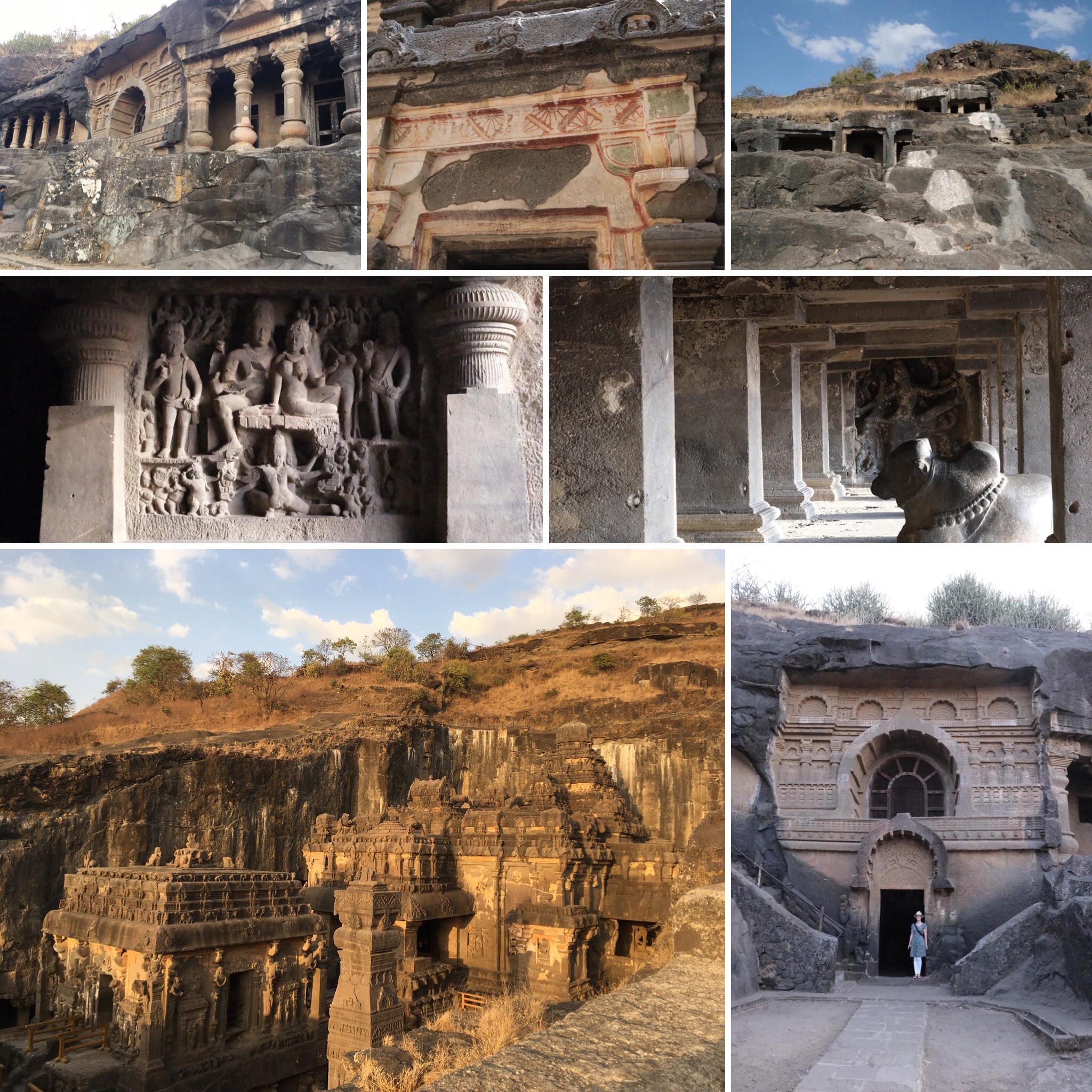
5.Caves. We hiked around caves in Nashik and Ellora, with over 34 caves cut into a hillside at Ellora there is a lot to see. These caves were chipped out over 5 centuries (beginning in 700AD) by Buddhist, Hindu and Jain monks. The most impressive structure is the ‘Kailasa’ Hindu temple in Ellora which is the wolds largest monolithic sculpture – carved from a solid rock face.

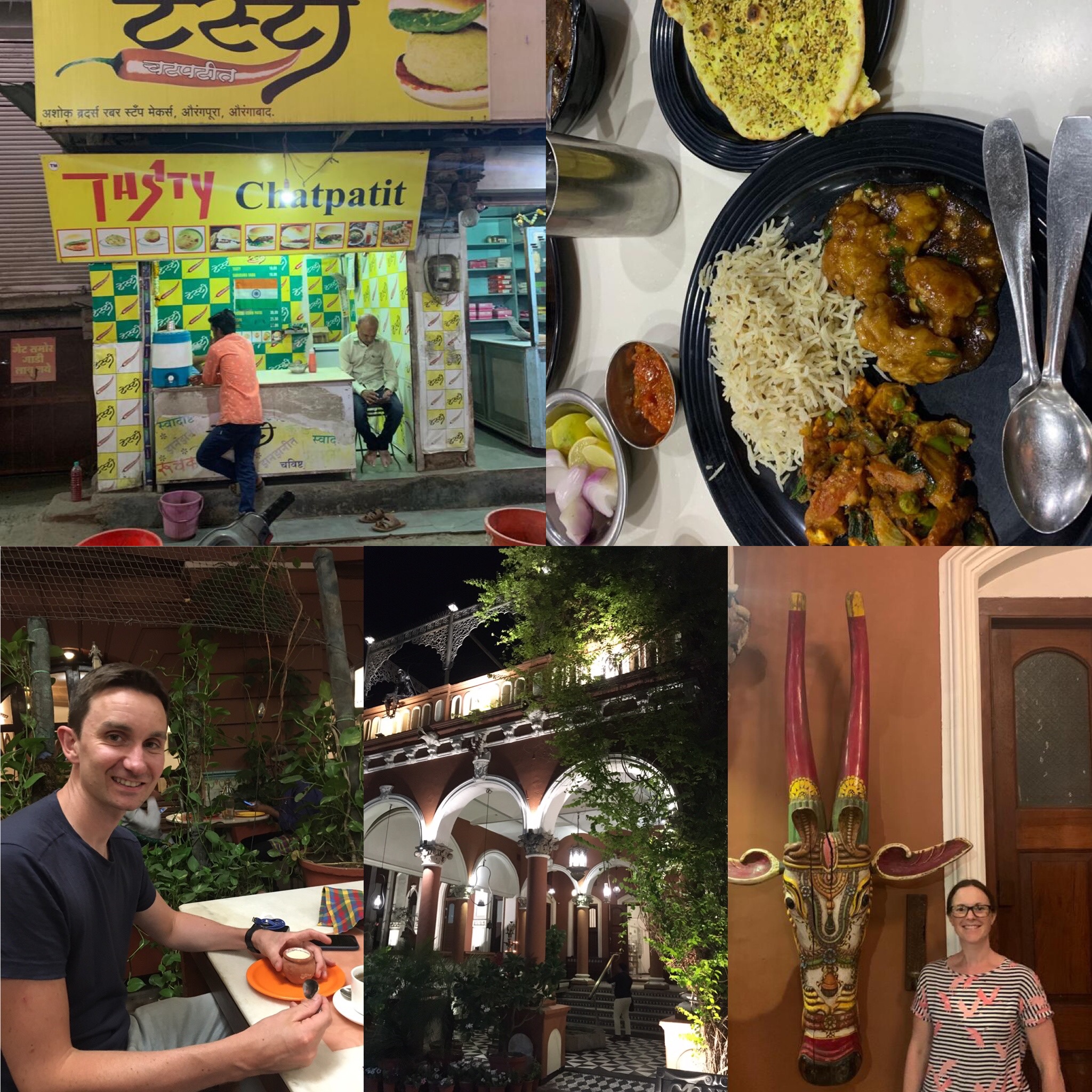
6.Bustling city stop overs. Although not strictly a highlight,more an experience we were glad to leave, the non-touristy cities of Aurangabad and Ahmedabad gave us a true insight into city life.Crowded,bustling,noisey and polluted.The Lonely planet says you can ‘chew the air it’s so polluted’ and the International air quality index would agree with Ahmedabad having the second worst air quality in India (next to New Dehli).Ahmedabad is the first place in India we have felt unsafe.It’s a crazy place with no pavements,we had to cross a 6 lane carriageway to get to a bus stop located in the central reservation,it’s no wonder on average 3 pedestrians die here a day from RTAs.To escape the bustle of both cities we headed for yummy vegetarian restaurants and enjoyed some delicious food.We were befriended by our table-neighbours in Aurangabad who let us share their chat puri.In Ahmedabad we relaxed in the oasis of calm of the heritage MG hotel and the highlight was matka kulfi,a creamy milk dessert.

A final thought… This week we had our first blessing from a Hijra in Mumbai. Most Hijras are transgender women, born male but who identify as women or “in-between”, in our case they were clear to state that they were “not man or woman”.

India seems to have a complicated relationship with gender and the Hijra. The hijra community have been largely discriminated against, often shunned from their family, living in the fringes of society and turning to begging or prostitution. Yet the Hijra are viewed auspiciously, they have a special place in Hindu mythology and are believed to be able to offer blessings, in our case a tap on the head for 10 rupees (or curses if no money is forthcoming).

Hopefully this complex relationship is turning full circle. Apparently hundreds of years ago Hijras were respected under Hindu tradition, this all changed under Victorian English rule where ‘non-procreative sexualities’ were criminalised. In 1994 India legally recognised Hijras as the ‘third sex’ and they now have the option to identify as a eunuch (“E”) on passports.

Week 6: Agonda to Mumbai (via Colomb and Galgibag, South Goa)

A throughly enjoyable and relaxing week predominately beach hopping in Goa..

Average Steps: 9000 (down due to time on beach). Average daily spend for two : £45

Top score at bat and ball: 104 (before Mark broke the bat)

Rats seen in Mumbai: 7

Book club this week…Midnight’s children by Salman Rushdie. Well we managed to finish it (just)! I think we might be in the minority in saying that we didn’t enjoy it, especially as it has won the Booker of Booker prizes. It is undoubtedly well written, with some wonderful descriptions, carefully chosen language and interesting links to Indian history. Unfortunately the story is long winded, with many tangents, too much magic realism and unlikable characters. In our opinion about 300 pages too long and we wouldn’t have persisted with it if we were at home.

Highlights this week include:

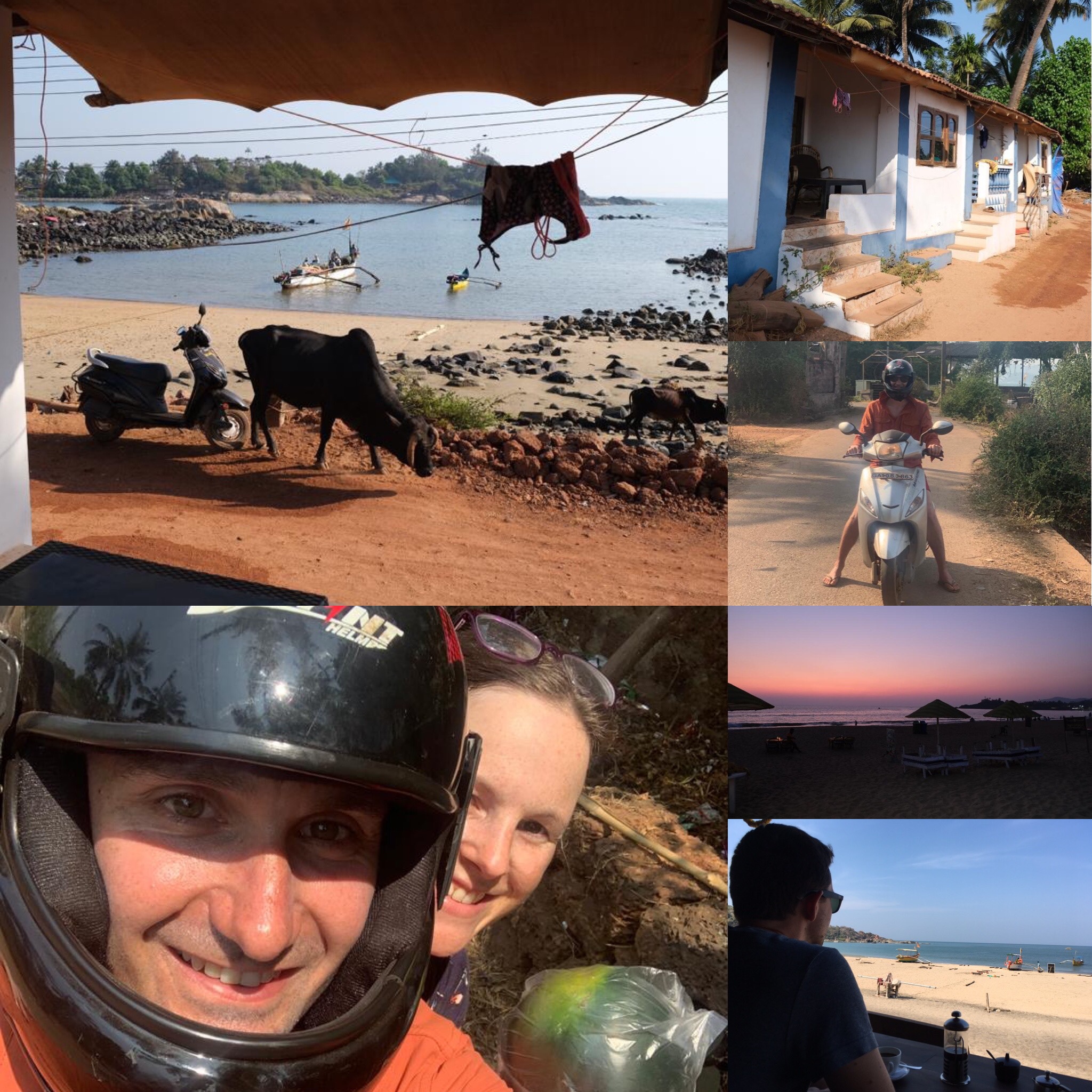
1. Beach hopping by moped. We joined the rest of India and hired a moped to scoot between beaches. Luckily, unlike the rest of Indians, Mark wore his helmet, as the police were out doing spot fines (although helmets for the main driver a now compulsory in a lot of states, from the driving we’ve seen Indians aren’t too bothered by following road rules or indeed enforcing them). We’ve only been in the quieter south Goa, but even here the beaches have a very different feel. We were glad we weren’t staying on the party beach of Palolem. We had a beautiful hut overlooking Agonda bay, then moved to a cottage with a wonderful Terrance at Colomb bay and the a lovely homestay apartment in quiet Galgibaga. We also enjoyed dinner at busy hippy Patnem and lunch at the lovely and serene Talpona beach. We’d throughly recommend Galgigbaga or Talpona for a relaxing Goan getaway.

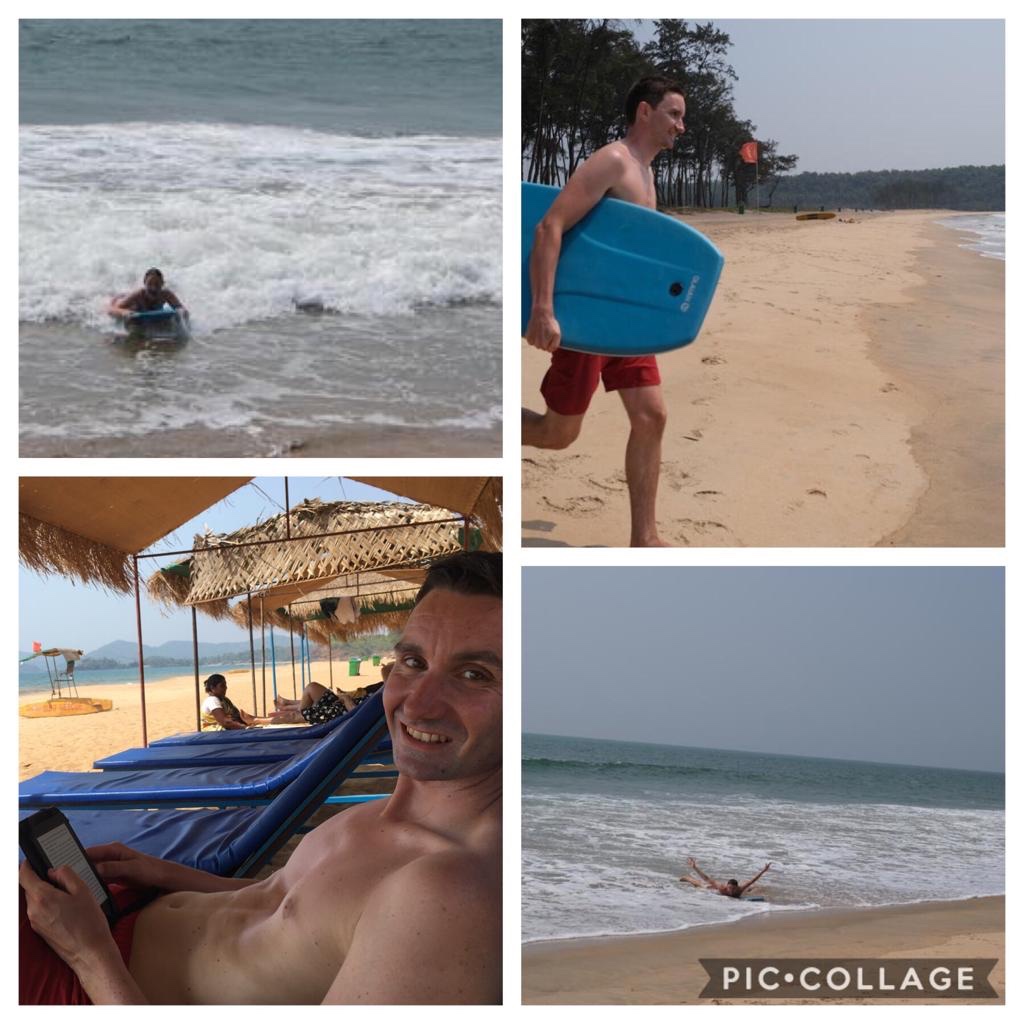
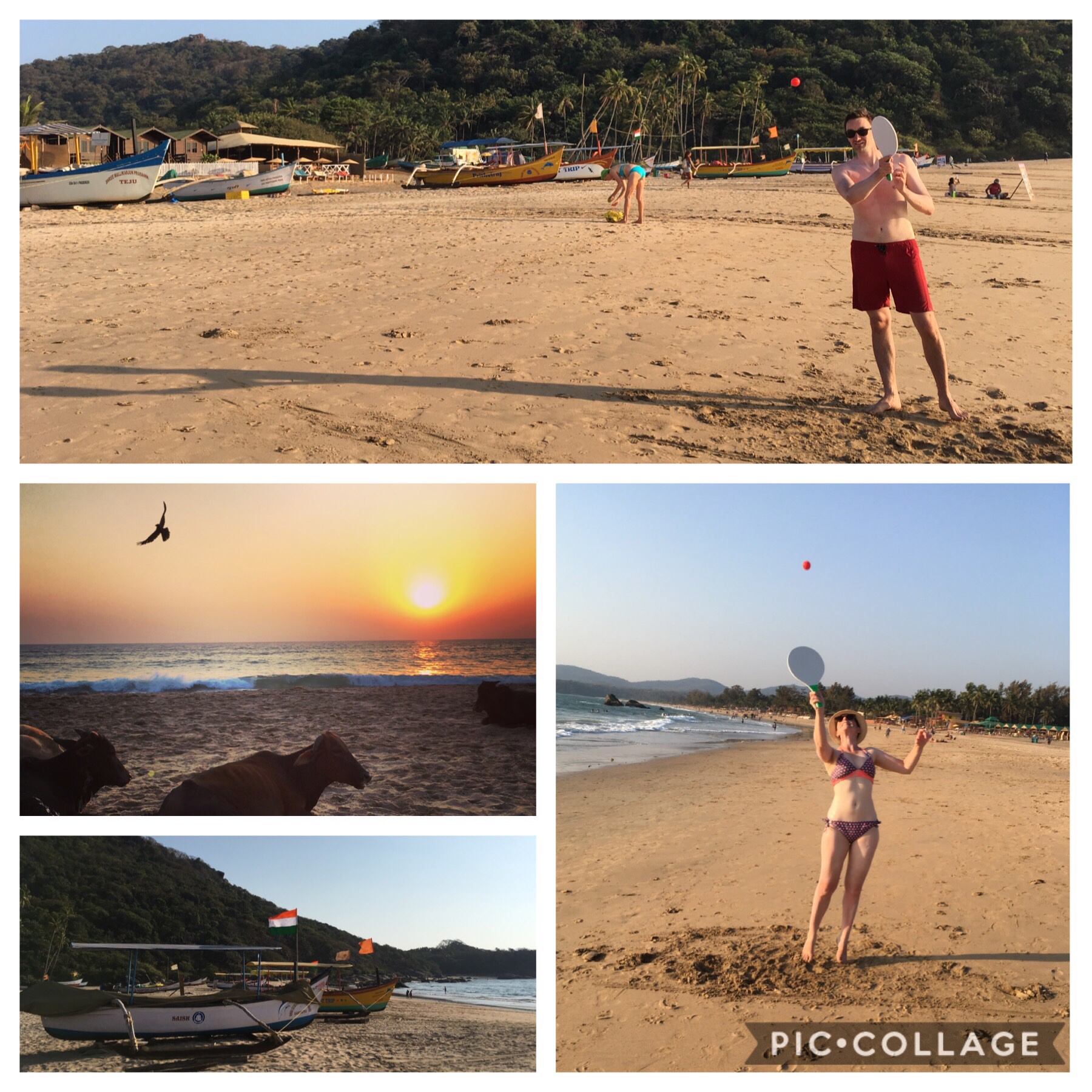
2.Activities on the beach. It’s been a tough week, bat and ball took a new level this week, we reached a total of 104 passes at a 4 strides, before Mark’s bat snapped with all the effort. The waves are fantastic for body boarding and we both enjoyed the ride to shore. Once you’re beyond the waves the water was lovely for some long swims. From the shore we were able to watch dolphins jumping and playing. We had wanted to windsurf but apparently there wasn’t enough wind, so the backgammon rivalry continued instead.

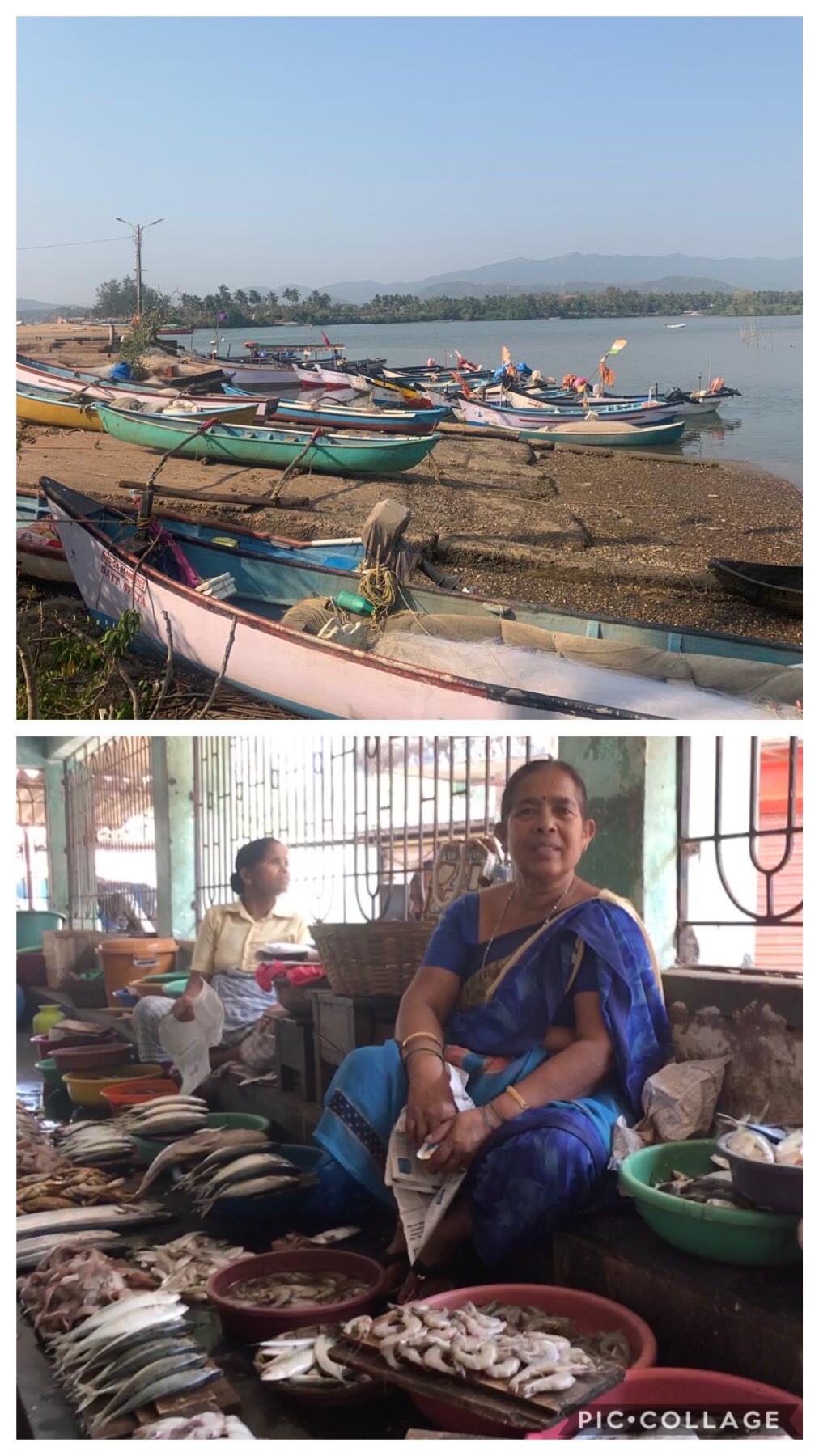
3.Seafood. Apart from swimming the best thing of being by the sea is the fish,yum! We enjoyed fish every night with tandoori kingfish, whole snapper, lemon fish and mackerel, and the local speciality ‘Goan style’ calamari and prawn Sukkha. We’ve seen a number of outrigger style fishing boats on the beach and saw the local women selling the daily catch Canacona’s fish market.

4.Sunsets. It’s lovely to be back on the west coast to see beautiful sunsets. In contrast to lively Varkala the beaches in Goa are more serene with a number of people meditating in the lotus position watching the sun go down – I’m not sure how much they appreciated our bat and ball activity.

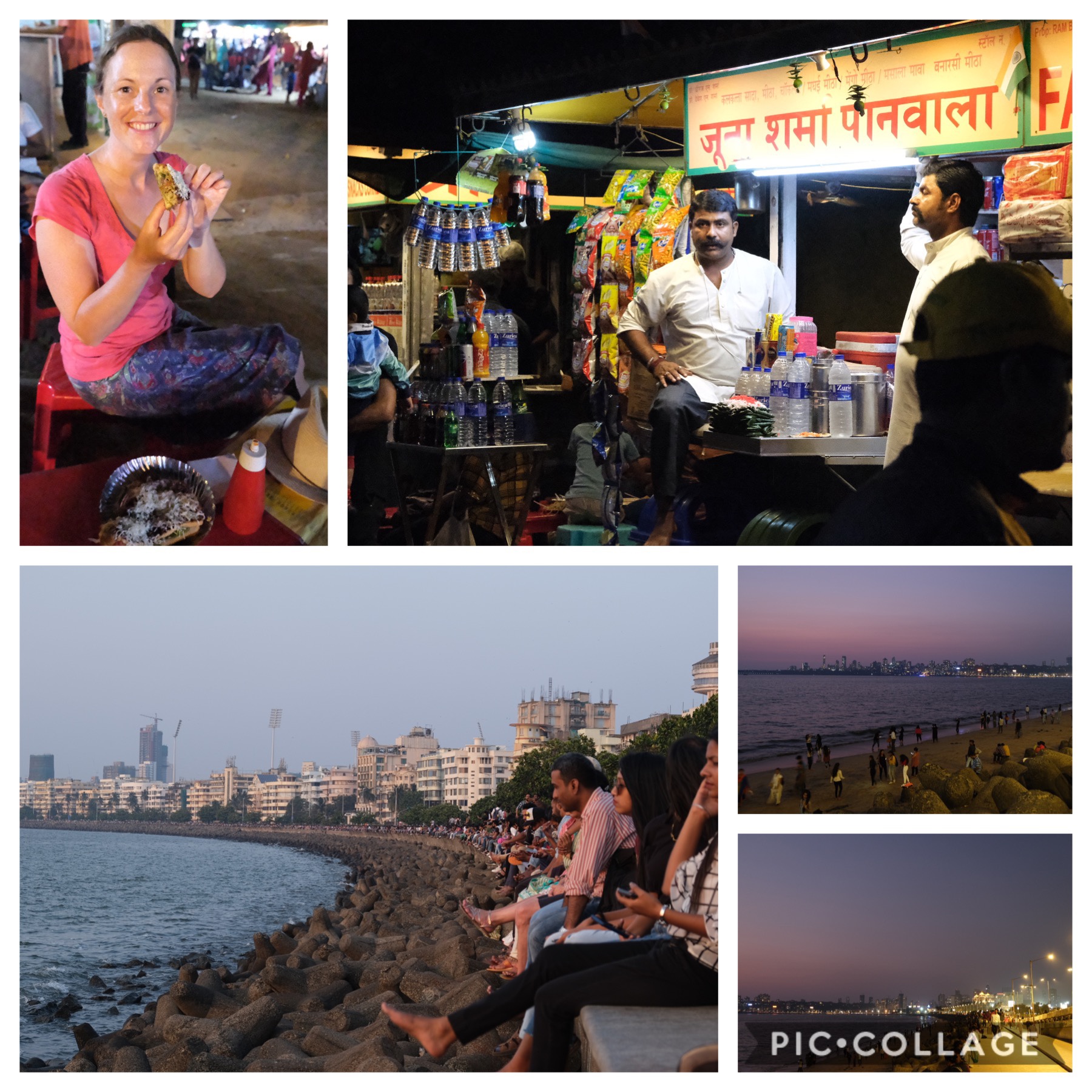
5.Marine drive and Chowpatty in Mumbai. We enjoyed an evening stroll along Marine drive, probably the most popular spot to watch the sunset in Mumbai. It’s lined by posh business high risers and art-deco apartment blocks. It was interesting to see the tetrapods in action (formal of costal erosion defence) having read about them in this week’s book. We ended the night with the locals eating some spicy street food on Chowpatty beach. We needed to share a milkshake near our accommodation to settle our stomachs.

A final thought…This week we’ve been talking a lot about plastic. Perhaps apt in the week that Greta Thunberg came to Bristol. India has a real problem with people littering and waste disposal in general, as such non-biodegradable objects are everywhere. Being faced directly with it makes the issue so unavoidable. The cows eat most things, so it’s the crisp wrappers, shampoo containers and drinks bottles that are left.

What has surprised us is the proactive steps India is taking (more so than the UK) with the problem. India’s anti-plastic movement includes cotton bags in supermarkets, metal straws in bars, to banning single use plastic in botanical gardens and public filtered water to re-fuel your bottles. Although behind Bangladesh (the first country to ban plastic bags in 2002), plastic bags are banned in 18 states and three states (including Maharashtra where we now are) have banned single-use plastic products including cups, straws, plates etc. In Goa there are people employed to pick up all plastic bottles and recycle it, indeed the beaches are beautifully litter free.

We feel guilty that at home it’s easy to ignore the problem because we ‘recycle’ and dispose of our waste and then forget about it. It’s got us thinking if India can ban single use products, why aren’t we in the UK. New York are banning plastic bags today in exchange for chargeable paper bags, shouldn’t we follow suit?

Week 5: Mysore to Agonda (via Hampi)

What a difference a week makes,moving on from Karnataka to Goa, from cities to tranquility…

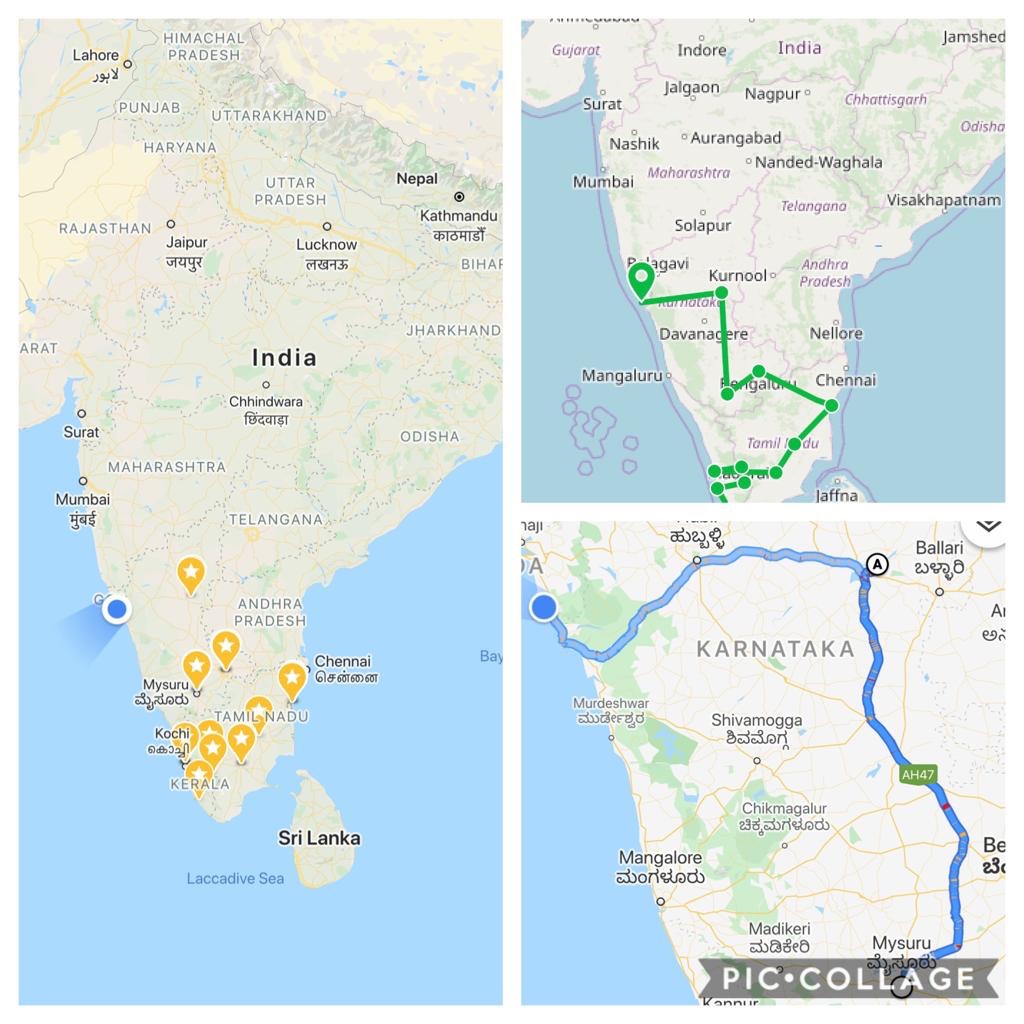
Our route so far (stars places we’ve stayed), bottom right this weeks journey.

Average Steps – 12829 (decreasing significantly in Goa), Average spend – £44

Distance covered – 800km. 7 buses, 2 trains (both overnight), 2 boats

Largest item seen on scooter – 10ft Banana tree ( – bananas). Proportion of westeren to Indian people in restaurant in Goa – 40:2.

We can’t write about book club this week as we’re about a third of the way through Midnights children, so I’ll save our thoughts for next week (when we’ve hopefully finished it).

Highlights this week include:

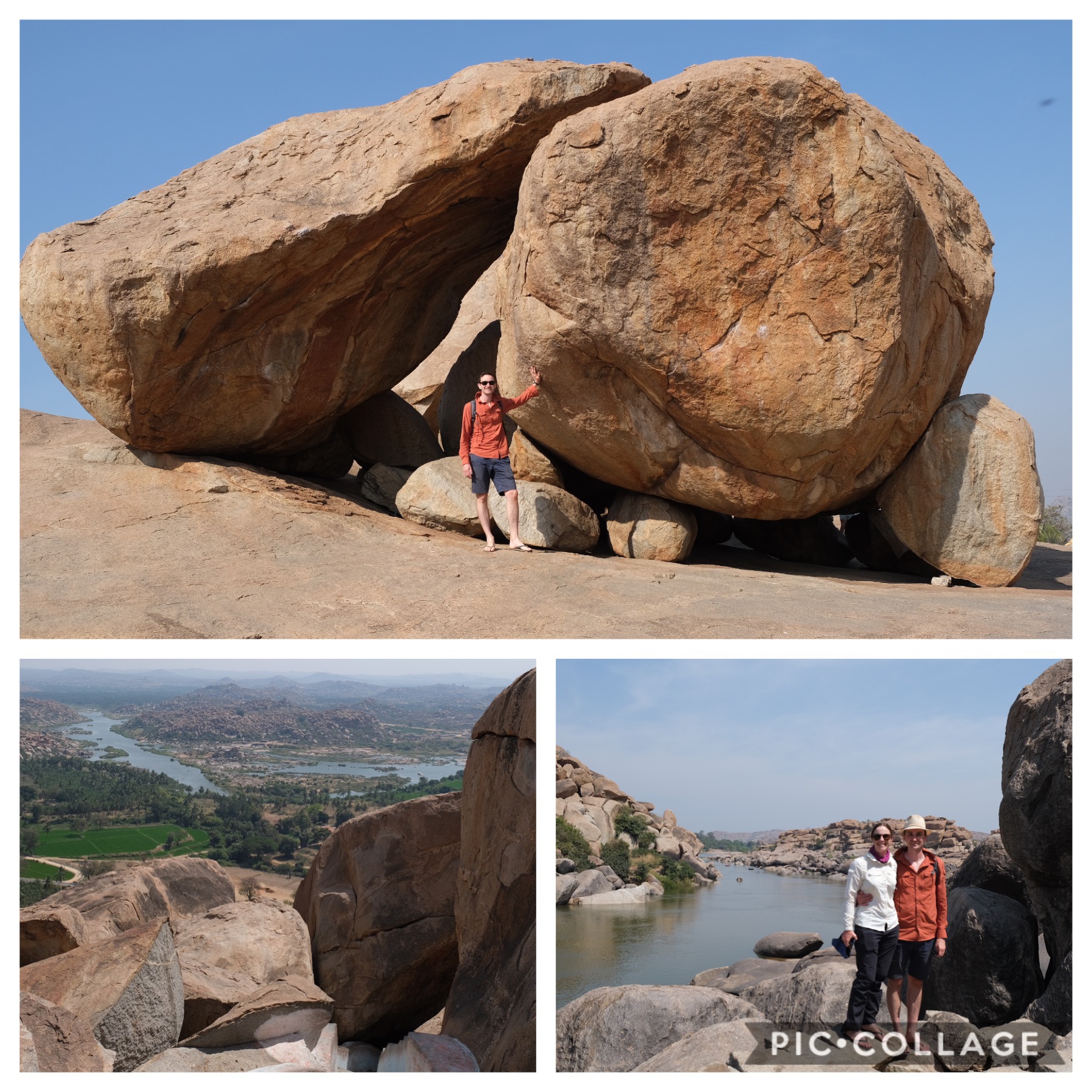
1. Boulders – We enjoyed walking, cycling and scrambling around The spectacular granite boulders at Hampi. We had thought they might have been created by plate tectonics, but I’m pleased to here there is no fault lines here (particular on the anniversary week of the Christchurch earthquake). These were created from gigantic granite monoliths (a craton, no less, a new word for me) which over millions of years of erosion have cracked, split and eventually metamorphed into these spectacular boulders.

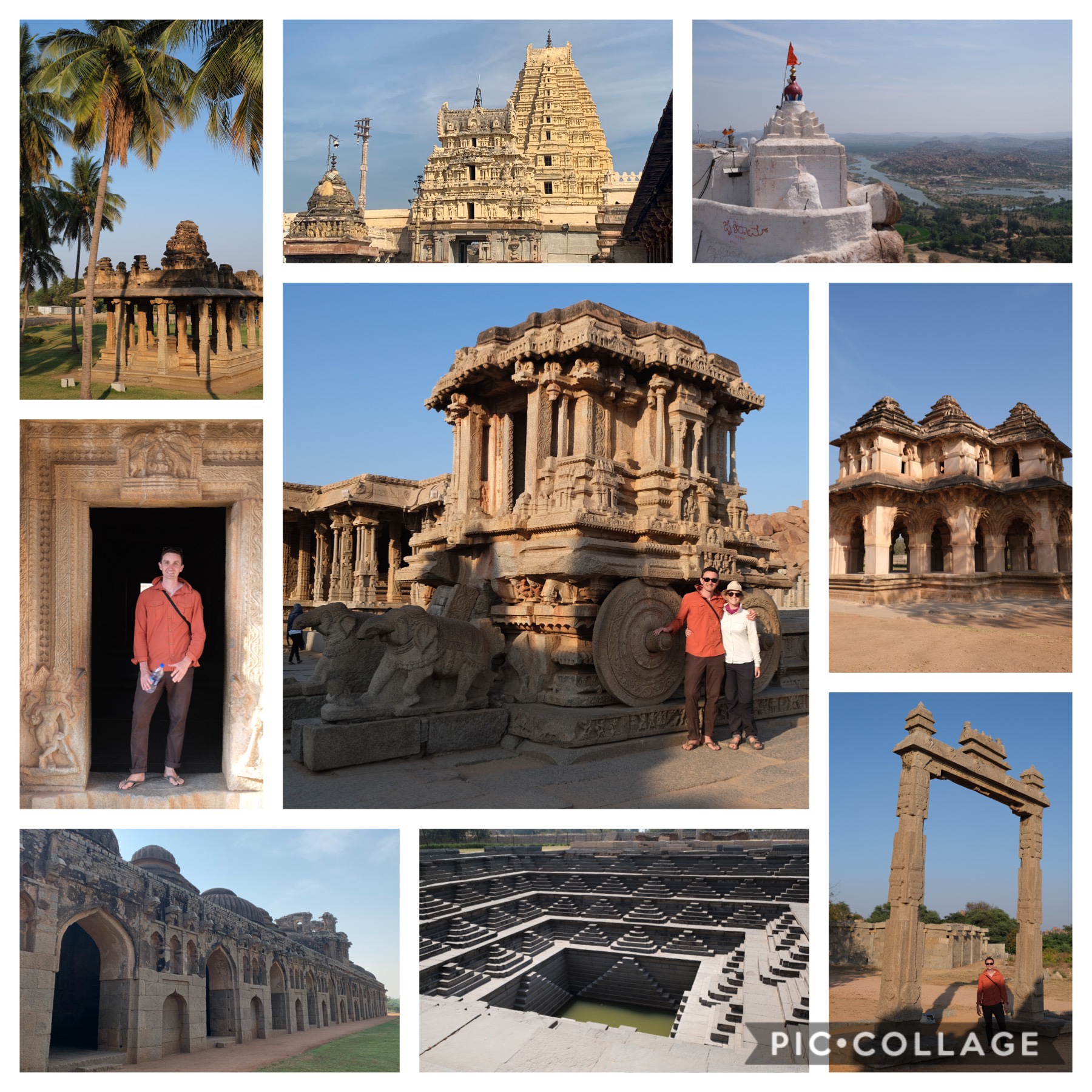
2. Cycling around Ancient temples – We hired some pretty old, gearless mountain bikes to spend a lovely day cycling around some of Hampi’s multitude of temples. Unfortunately a combination of being out all day, 36 degree heat and our Indian Ayoverdic 50+ suncream being under-par, meant we both caught too much sun. We’re now on to a different brand of 60+ cream containing zinc and covering up in the heat of the day.

3. Coracle ride – Apparently coracle (round boat) originates from the welsh word for boat and are a traditional method of transporting people or animals across rivers. We had a rather dizzy ride, although turns out when Mark was at the helm that it can be rowed in a straight line rather smoothly.

4. Bat and ball on Goan beaches – To continue Lizzies ball skills education we’re playing daily bat and ball in between reading, swimming and dodging cows on the beach. It’s a hard life in Goa.

5. Sleeper trains – We’ve taken two sleeper trains this week (Mysore to Hosapete and Hosapete to Margao). Not necessarily on time (in fact the second incurred a 3 hr delay), but comfortable and always interesting. We’ve found it’s a perfect opportunity to watch a film, read our book and catch up on our diaries, as long as our cabin neighbours don’t want to talk too much.

A final thought…This week we’ve been thinking a lot about Hinduism, by far the most popular religion in India (79.8% population). We’ve been speaking to our home-stay hosts about their religious practice and immersed in Hindu tradition at the sacred site of Hampi.

We read an article this week in the guardian about the rise of the RSS (extreme Hindu branch). We’d heard about about the controversial CAA (Citizen Amendment Act) before coming away, but had little appreciation for the significance. We have been moved by the current religious unrest in certain areas of India. It has echoes with the prisoners of geography book from last week and a timely reminder of the importance of acceptance and unity. Apparently in President Trumps visit this week he’s going to discuss with PM Modi about respect for religious minorities, so I’m sure everything is going to be okay! Here’s a link to the article if, like us, you want to know a little more of what’s currently going on in India…

https://www.theguardian.com/world/2020/feb/20/hindu-supremacists-nationalism-tearing-india-apart-modi-bjp-rss-jnu-attacks

Week 4: Pondicherry to Mysore (via Bangalore)

From the serenity of lovely Pondi to the colourful madness of Bangalore…

Delhi belly – 0.5, Mosquito bites – 0

Average daily step count this week = 12,739. Average daily spend for two = £44.

Independent reads this week: Men Without Women by Muraki, well written with interesting characters and some good stories. As a collection of short stories sometimes a bit repetitious with an undertone of melancholy (in Murakami style) and left wanting more. Prisoners of Geography by Tim Marshall, A thought provoking but sometimes dry read, good to read as a whole and then re-visit in chunks. It made me greatful to be born in the UK, worried about power-crazed China and sorry for countries created after wars. In the era of Brexit I’d recommend everyone to read it.

Highlights this week include:

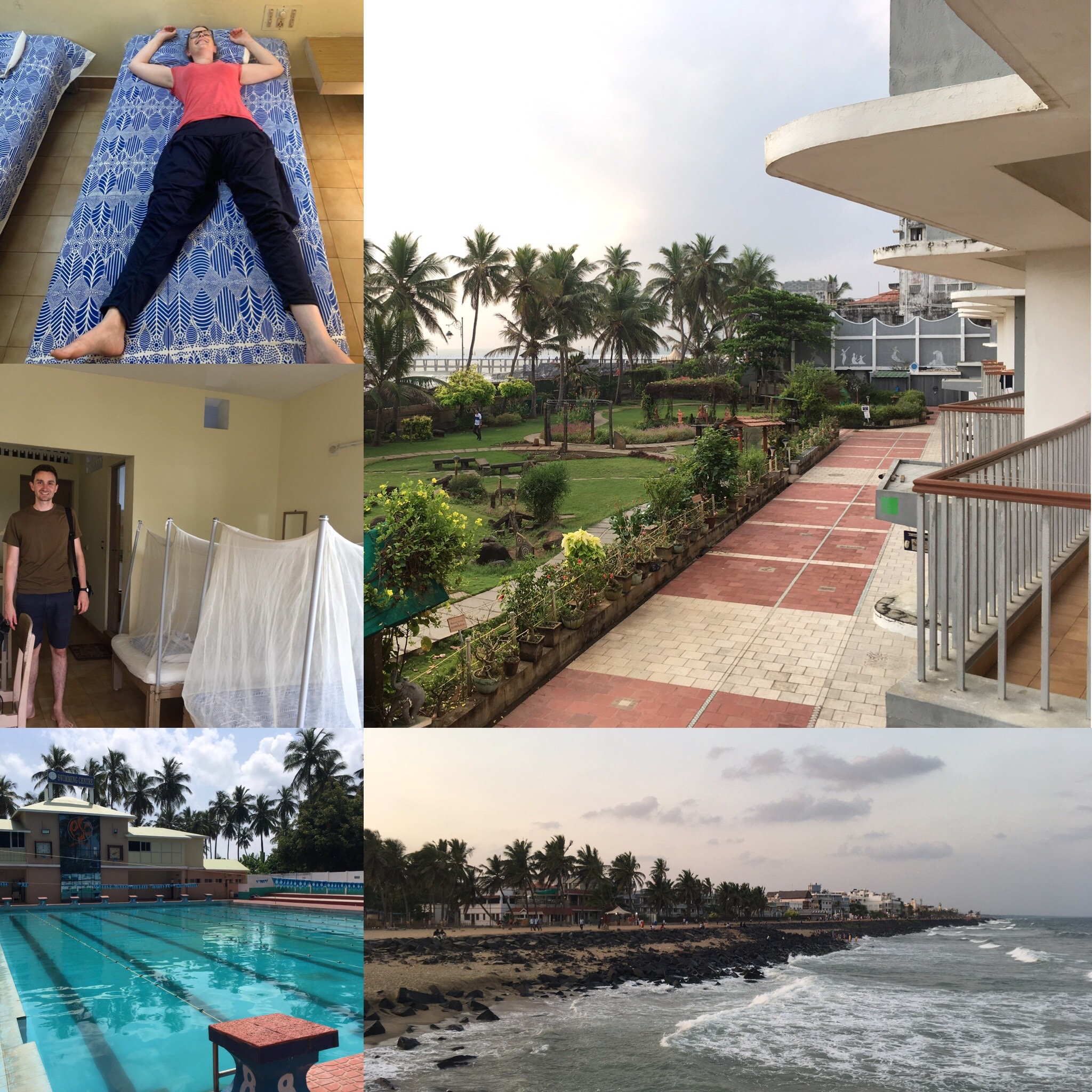
1. Sri Aurobindo Ashram New Guest House. We loved this little haven so much we extended our stay until Wednesday. Basic room, but perfectly formed with box mosquito nets and a lovely balcony with a beach view. We’d throughly recommend it if you’re staying in Pondicherry. They also do bike hire, so we were able to cycle around all the associated Ashram sites and enjoy a morning swimming at the Pondicherry swimming center (apparently Indians aren’t big fans of swimming).

2. Bangalore Flower market – A bustling and colourful experience. We wandered around lanes full of bags of flowers and stumbled across this bustling square with flower auctions and large Leis / flower spirals made up for Hindu worship. Lizzie even gained a free rose from one of the sellers (makes for a cheap valentines).

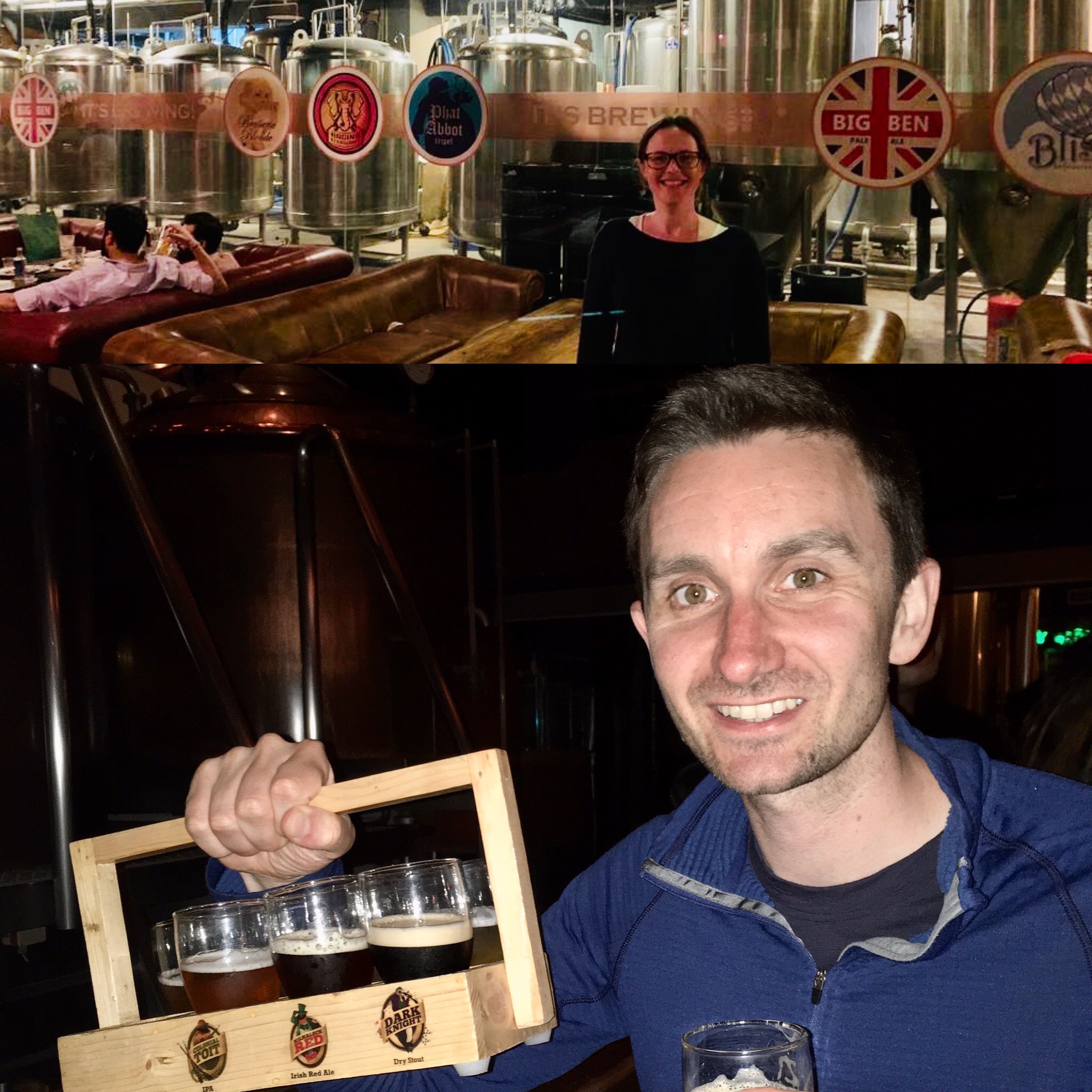
3.Microbreweries – Since 2010 Bangalore has become the microbrewery capital of India and is now home to over 50 microbreweries. We enjoyed two (Toit and Arbor) which made a refreshing change from Kingfisher extra strong served elsewhere. Even better the beer was served in a glass, rather than the funny ceramic mugs they give you in Kerala (to try and hide the fact they’re serving alcohol).

4. Street Food – Feeling pretty good on only 1.5 episodes of a dodgy tummy we decided to head to VV Puram for a street food dinner. Cheap and tasty. The stuffed dosa and Roti with curry were a hit, the spicy hair ball and salty biscuits we’d give a miss next time.

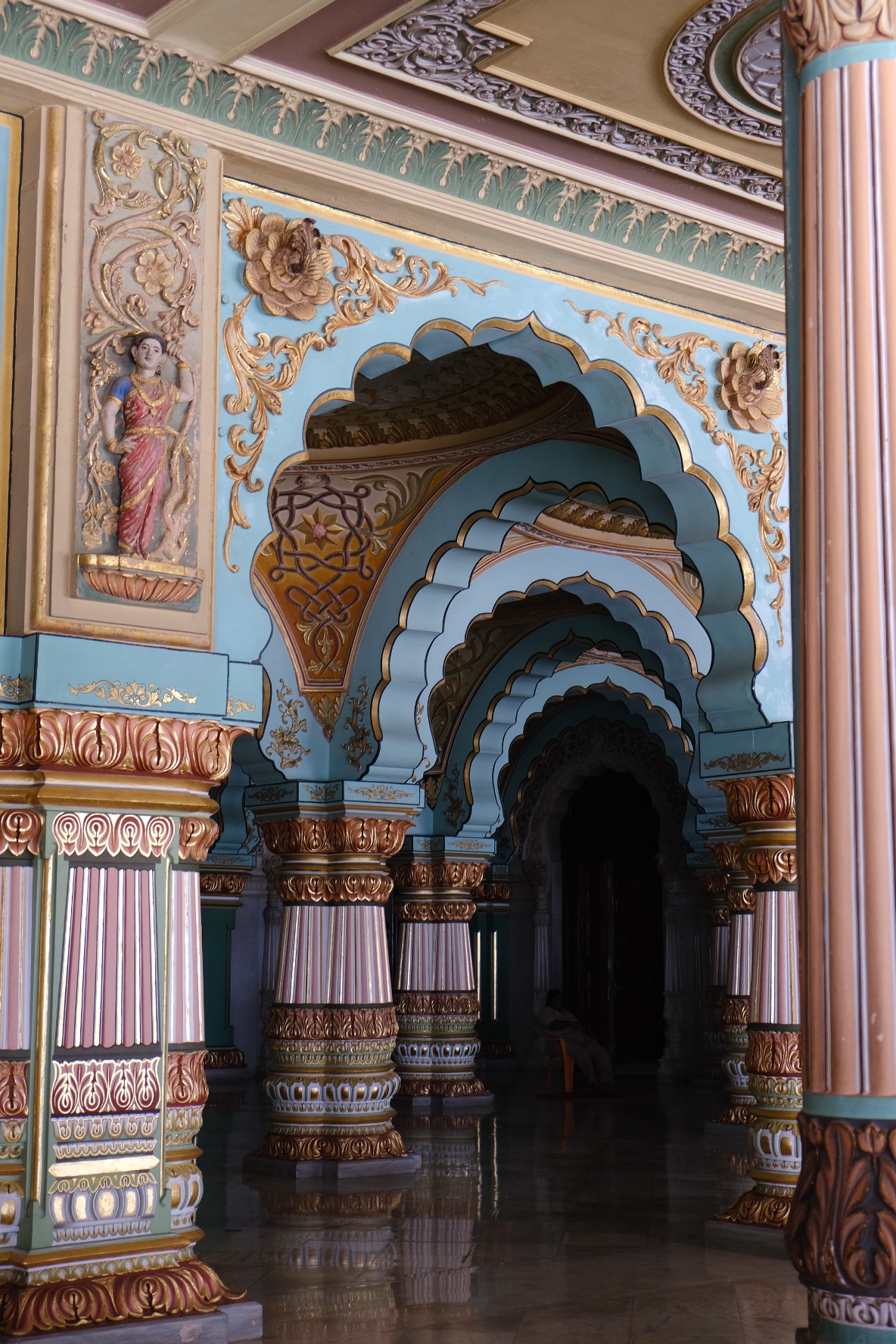
5. Mysore Palace – Claimed to be the second most visited palace in India, secondary to the Taj Mahal (even though technically that’s a mausoleum) and still home to the Wadiyar dynasty. We enjoyed a wonder round accompanied by a down-loaded, free Indian tour guide. The desire for colour extends to the interior of the palace.

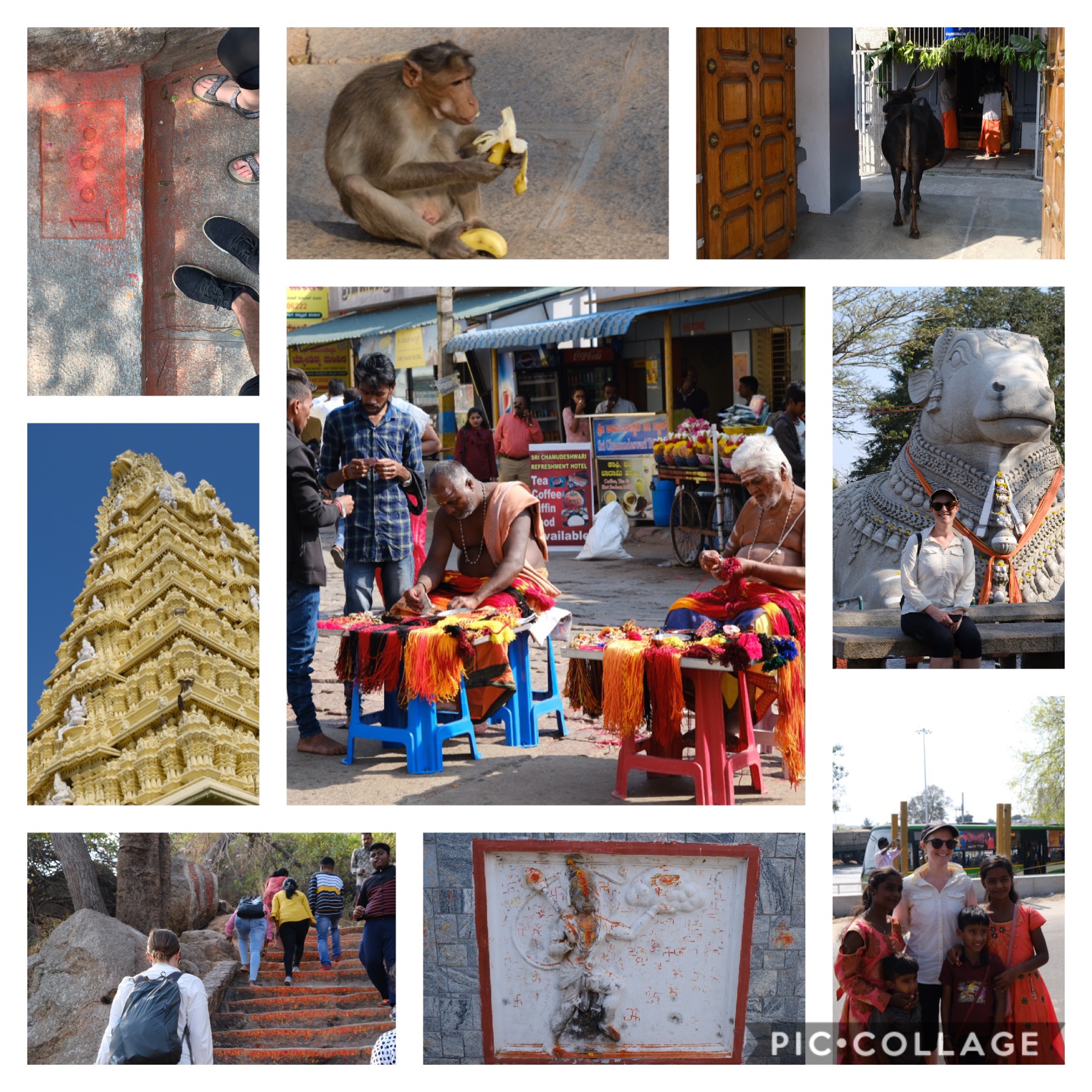
6. 1001 steps above Mysore – Early morning hike up champundi hill, see Bull stone carving, views over Mysore and temple at the top. Mark enjoyed a coconut refreshment having lost our bananas to the thieving monkeys and Lizzie posed for photos with lots of children.

Final thought – As we walked around the congested streets of Bangalore we were surprised to hear that only 5% of Indians own cars (compared to 70% in the western world). This is probably due to the predominant population living on low incomes in rural areas and the preponderance for motos. Despite this the roads are extremely congested. The congestion and exhaustion from constant bargaining with Tuk-Tuk drivers prompted two Mumbai graduates to set up Ola. We found Ola to work really well, no bartering required, practically half price journeys and the drivers deliver you to the right place. Ola has now developed low price trip-sharing options and long distance taxi hire.

Week 3: Fort Kochi to Pondichéry (via Madurai and Trichy)

We’ve crossed the boarder from Kerala to Tamil Nadu,and found many more Hindu temples…

We’re feeling very lucky to be able to travel around this beautiful and busy country.

Delhi belly – 1 (A short 24hr upset),Mosquito bites – 11, irritation from the hairs of a caterpillar – innumerable.

Average daily steps this week: 14,927

This weeks book club: White Tiger by Aravind Adiga. As a winner of the Man booker prize we had high hopes. It’s a quick,easy and sometimes insightful read (I have since found the weighing and fortune telling machines at the bus stations). We felt it was very one sided with a rather juvenile voice, perhaps because it’s told from the perspective of an uneducated man. We missed any true character development and it felt rather damning towards India, we can see why locals might not like this book, we weren’t gripped either. Overall 2/5.

Highlights this week include:

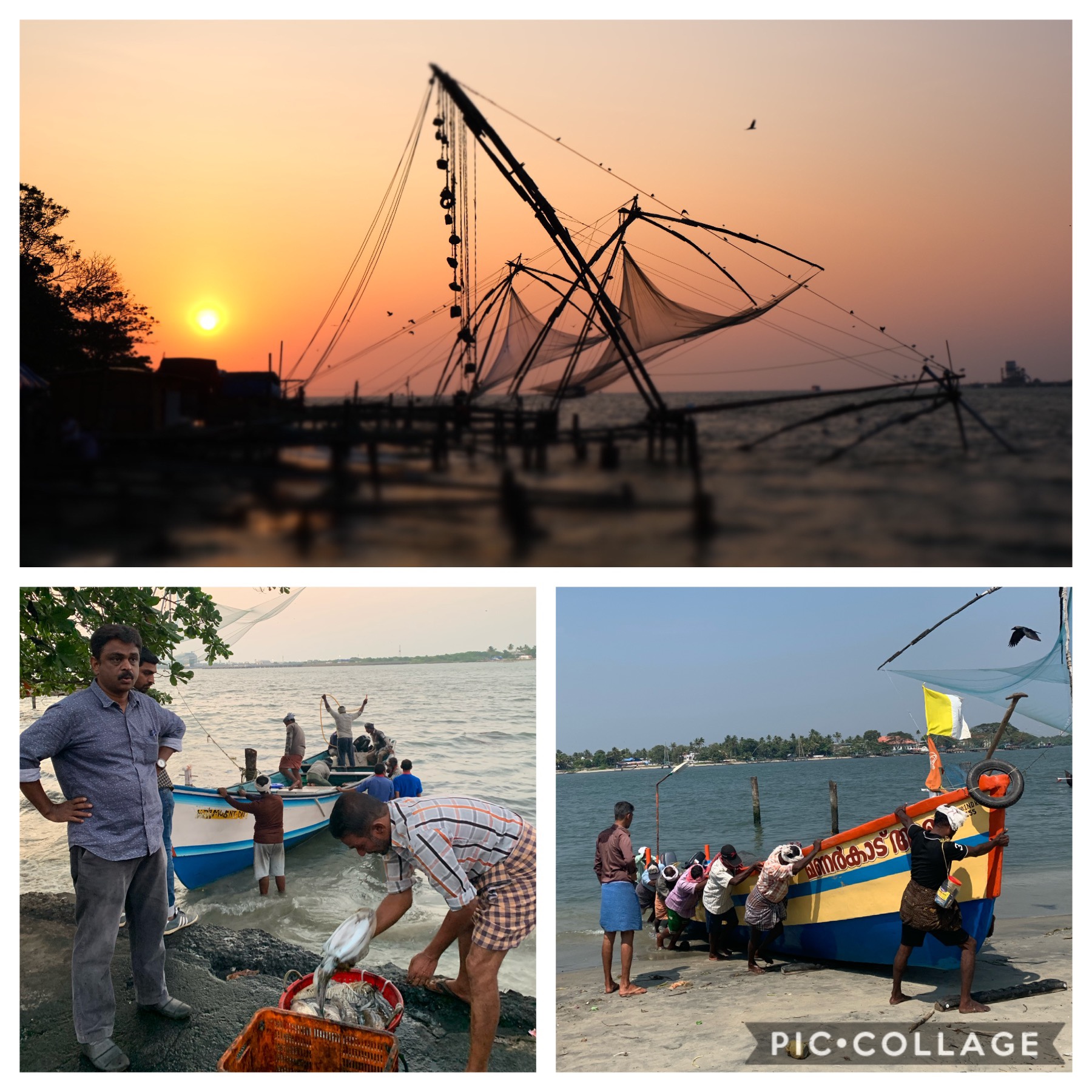
1. Chinese fishing nets – a famous site in Fort Kochi and beautiful to see at sunset, chatting to the fishermen whilst the nets are in action (Mark found a fellow Arsenal fan in an Indian fisherman). Even more interesting is a bit further down the road where the fishing boats bring on their days catch and everyone gathers to have a nosey and grab some fish before it gets transported off. Certainly a highlight for us was to indulge in a fish platter with a chilled glass of Indian Sauvignon Blanc from the Karnataka region.

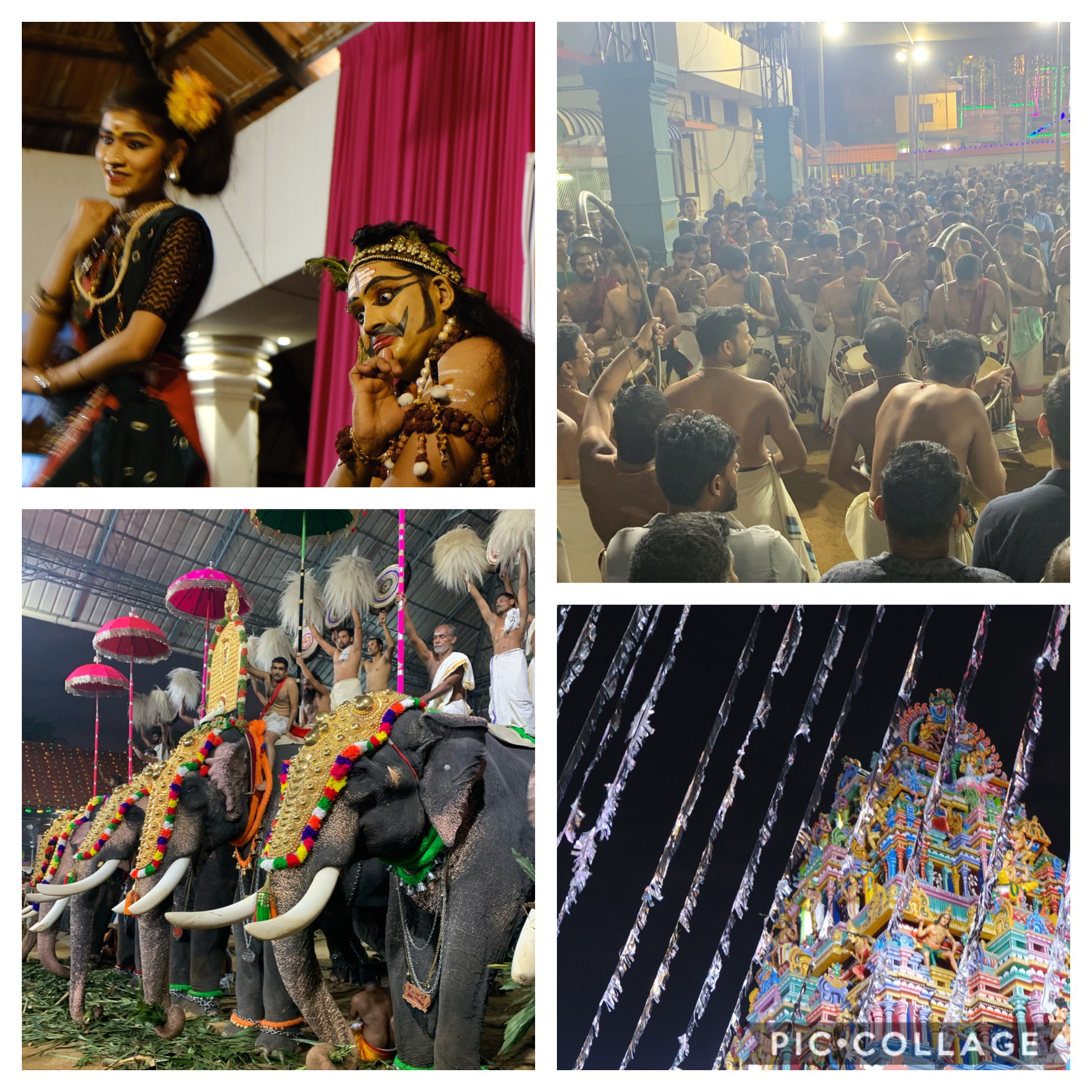
2. Hindu festivals – The Hindus certainly like festivals and with over 33million gods there’s a lot to celebrate.This week we spent two nights at the Shiva temple in Ernakulam to enjoy the Ulsavam festival. Just a 6p ferry ride from Fort Kochi. We experience loud drumming, kathakali dancing, singing, Indian classical music, fire crackers and elephants parading. We thought this was something fairly unique until we entered Tamil Nadu and visited three other temples and noticed they seem to have parades or celebrations each day.

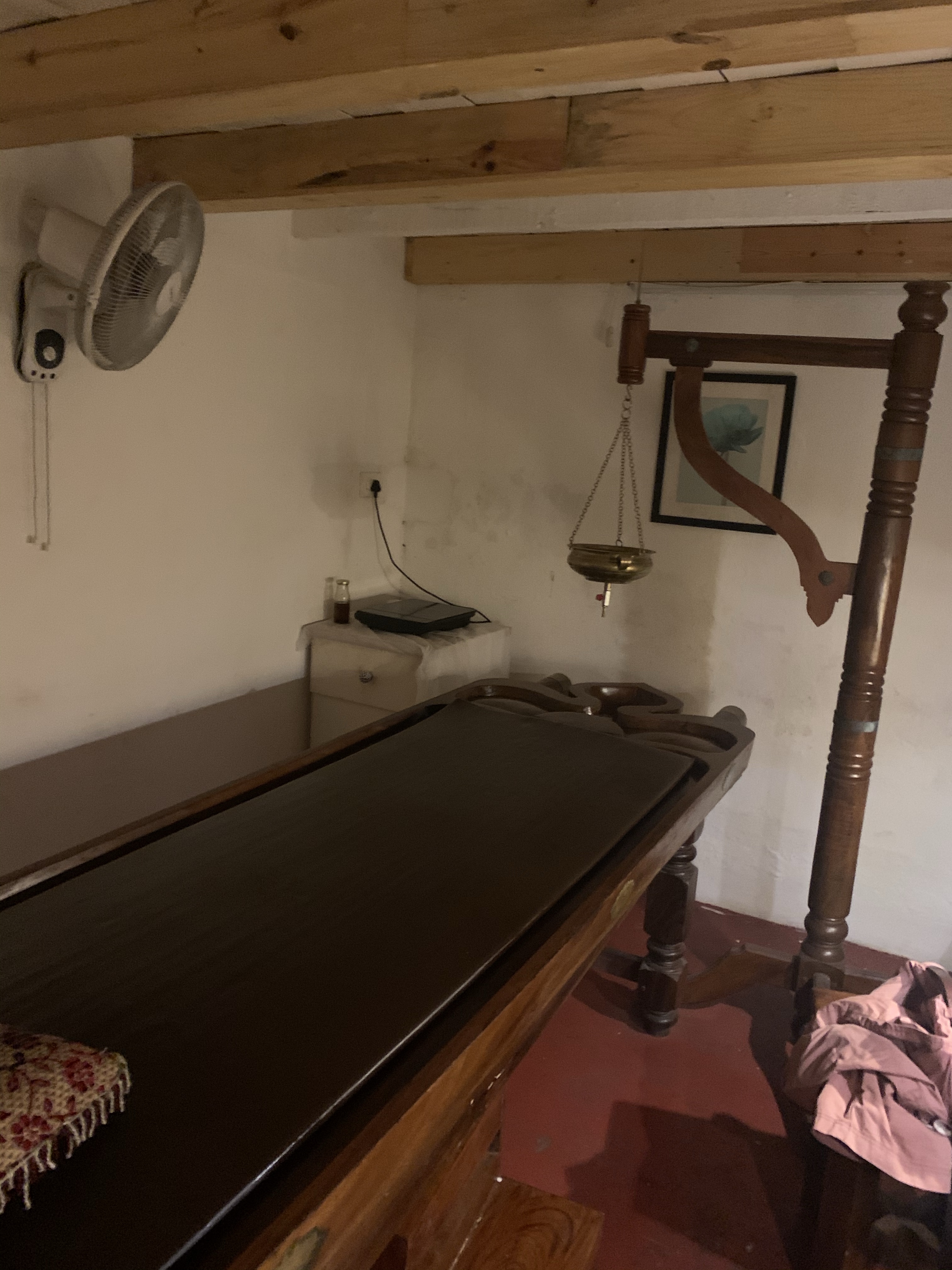
3.Auyverdic massage – perhaps not quite a highlight, but certainly an experience. We both bared all in front of our Indian masseurs, got lathered in warm “medicated” oils and had a massage (lots of breast fondling involved), not for the prudish. A nice massage, but rather grim room with lots of mosquitoes made it difficult to fully relax.

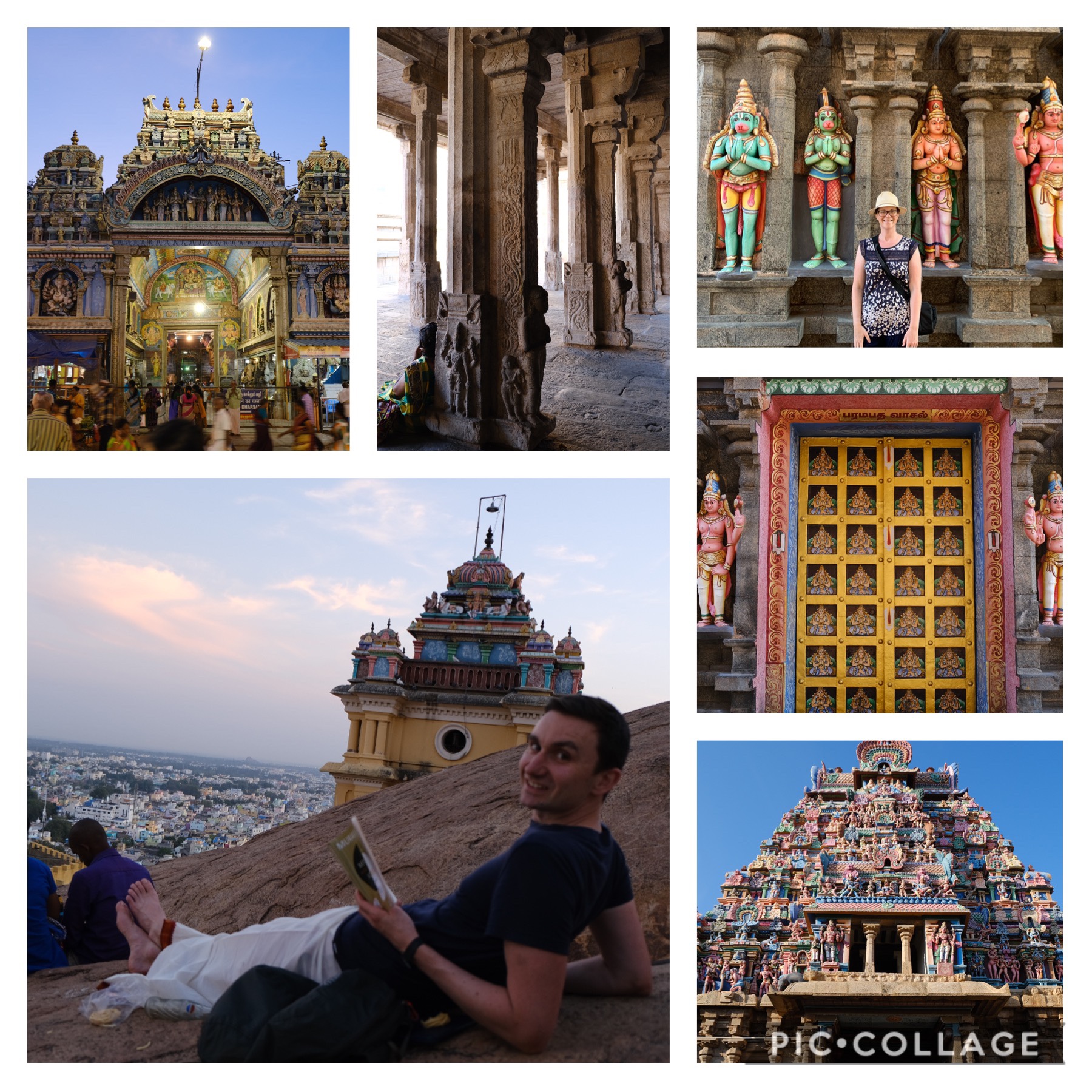
4.Temples, Temples, Temples – We’ve entered into Tamil Nadu and the sacred heart of India, it boasts some of the oldest and largest Hindu temples. We had a bustling walk around Meenakshi Amman temple and a Zen-like walk around Sri Ranganathar swampy temple with a buzz of ‘ohmmmm’ in the background. Our favourite was a lovely evening walk up the steps to the rock fort temple, where we were able to watch the sunset over Trichy whilst sitting with the locals on a rock. Controversially it seems that most temples have their own temple elephant (or 7), these appear trained to take money from a worshiper, bless them by placing their trunk on your head and then handing the money over. We’re told that the temple elephants get treated really well and whilst they are completely mesmerising, we felt an overwhelming sadness at seeing these beautiful animals here rather than with their family in the wild (as per last week).

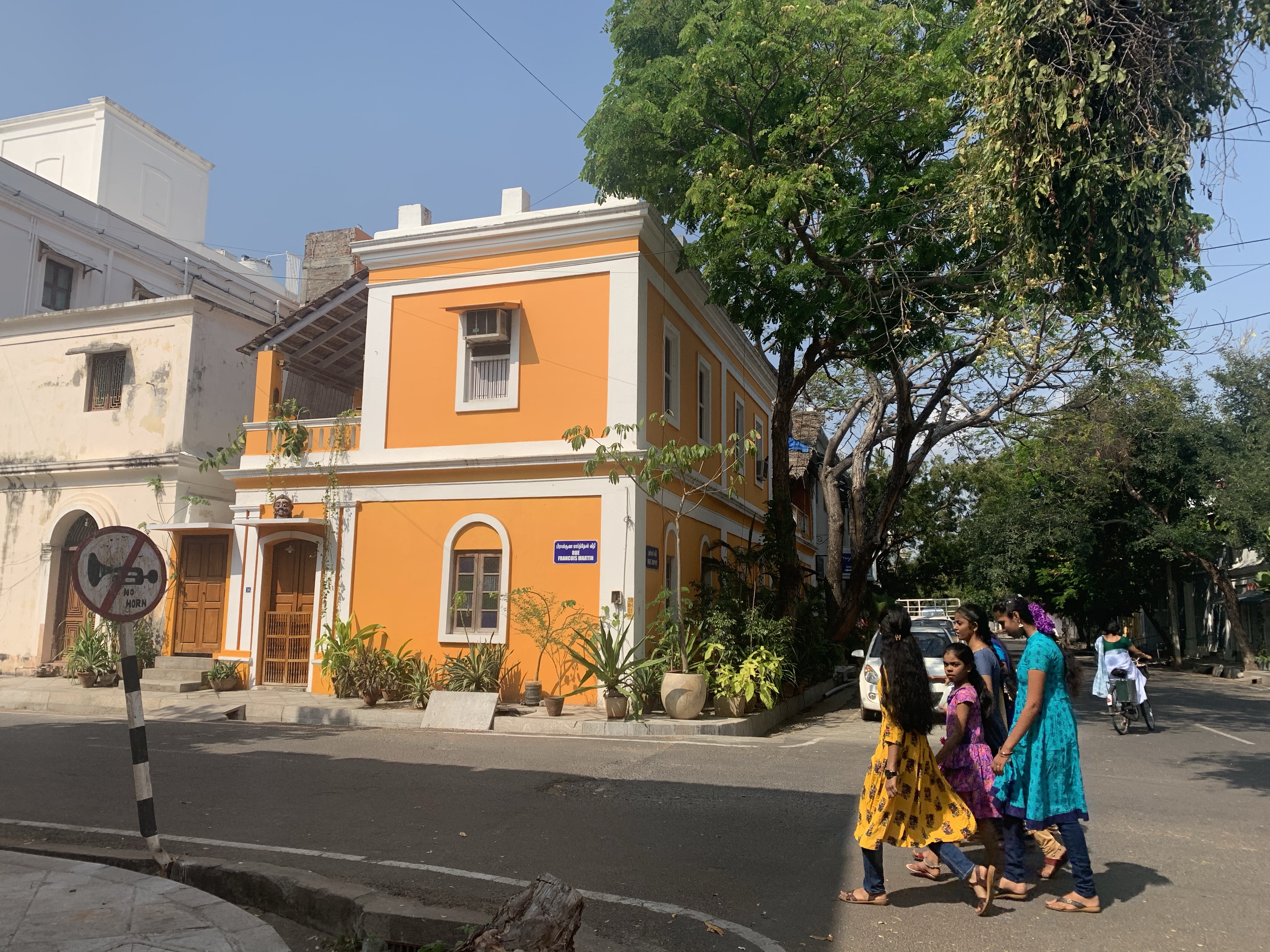
5. Pondicherry – Ahhh thanks French colonialism. Pondicherry and the neighbouring Auroville provide complete escapism from the bustle of India. There are beautiful colonial buildings, traffic free sections (with no horns) and French patisserie – bliss. We spent our first two nights in a beautiful yellow colonial guest house and enjoyed G&T (thanks air India) on the roof-top. We like it so much that we’ve decided to stay and checked in to a beach-side Ashram. With no mandatory check-out, only £8 (for 2)/night and daily meditation, who knows how long we’ll be here.

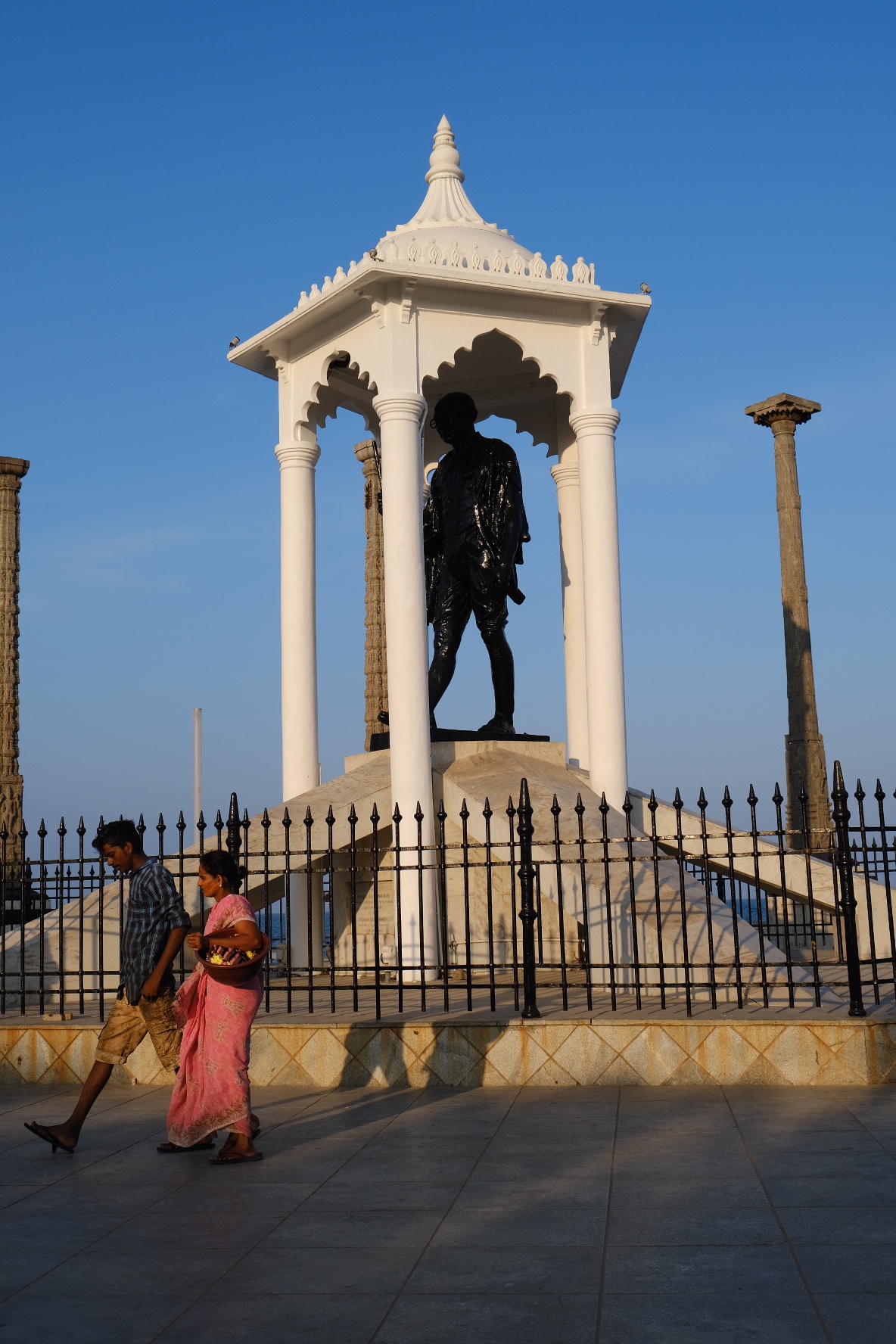
6.Gandhi – What a man! Peaceful politician, who campaigned for equality (both in caste and between the sexes) as well as Indian independence. We knew very little about him, including his involvement in creating the Indian flag, until we explored the Gandhi museum in Madurai.

A Final thought…This week we saw a man cycling, I mean real cycling – full lycra, cleats, road bike etc, next to our bus. We thought ‘he must be mad, this is India, the heat and the lack of road rules’. Then we came across his support car ‘cycling for widows’. We found that this mad man is an Englishman, Chris Parson, cycling for the Loomba foundation who support widows. Traditionally women have been treated pretty appallingly if their husband dies (even killed). He’s cycling 450km, in 45 days to raise money, what an inspiration! If you want to follow him then he has a blog https://cyclingwidows2020.home.blog. We’re hoping that the roads in Europe maybe a bit kinder to us than the Indian ones are to him.

Week 2: Kumily to Fort Kochi (via Munnar)

What a difference a week makes,cooler air and lighter food

Delhi belly – 0, Mosquito bites – 2, Public buses – 3, tuk-tuks – 5, trains – 0

Independent reads this week – How to be a footballer by Peter Crouch – Mark giggled all the way through;light hearted and interesting for a football fan. When breath becomes air by Paul Kalanithi – Certainly makes you want to grab life with both hands and the epilogue by his wife was moving,but I couldn’t relate to the American medical system (thank goodness).

Average daily spend for 2 = £58 (more this week due to activities).

Highlights this week include:

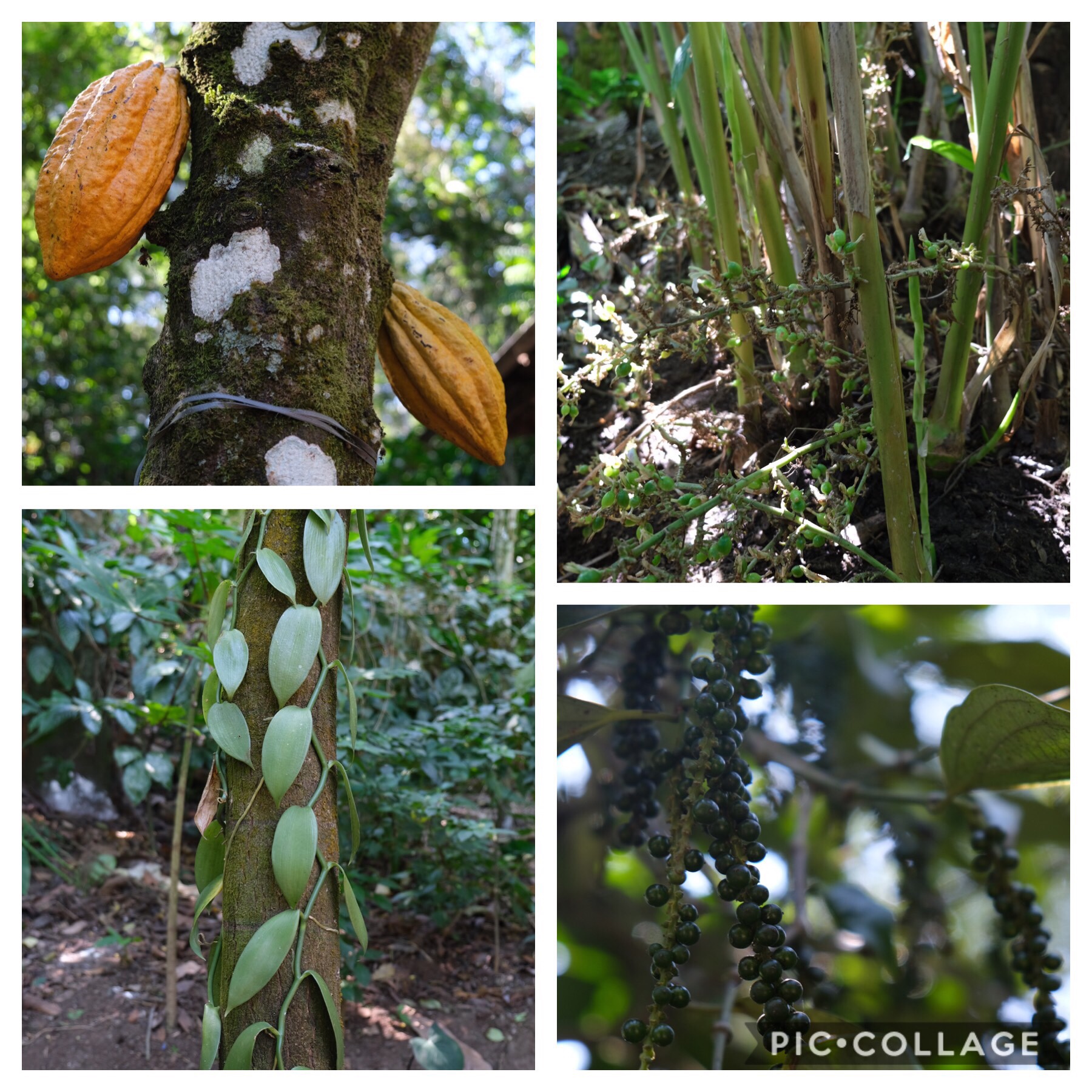
1. Spices – We’re loving the flavours of South Indian food, full of taste and not too spicy (although we have found my spice threshold).Intrigued as to where the spices all come from we went on a wonderful spice garden tour – who knew that green,black,red and white pepper all come from the same plant? That cardamon is from the route of a palm, or that vanilla grows as an epiphyte, interesting stuff!

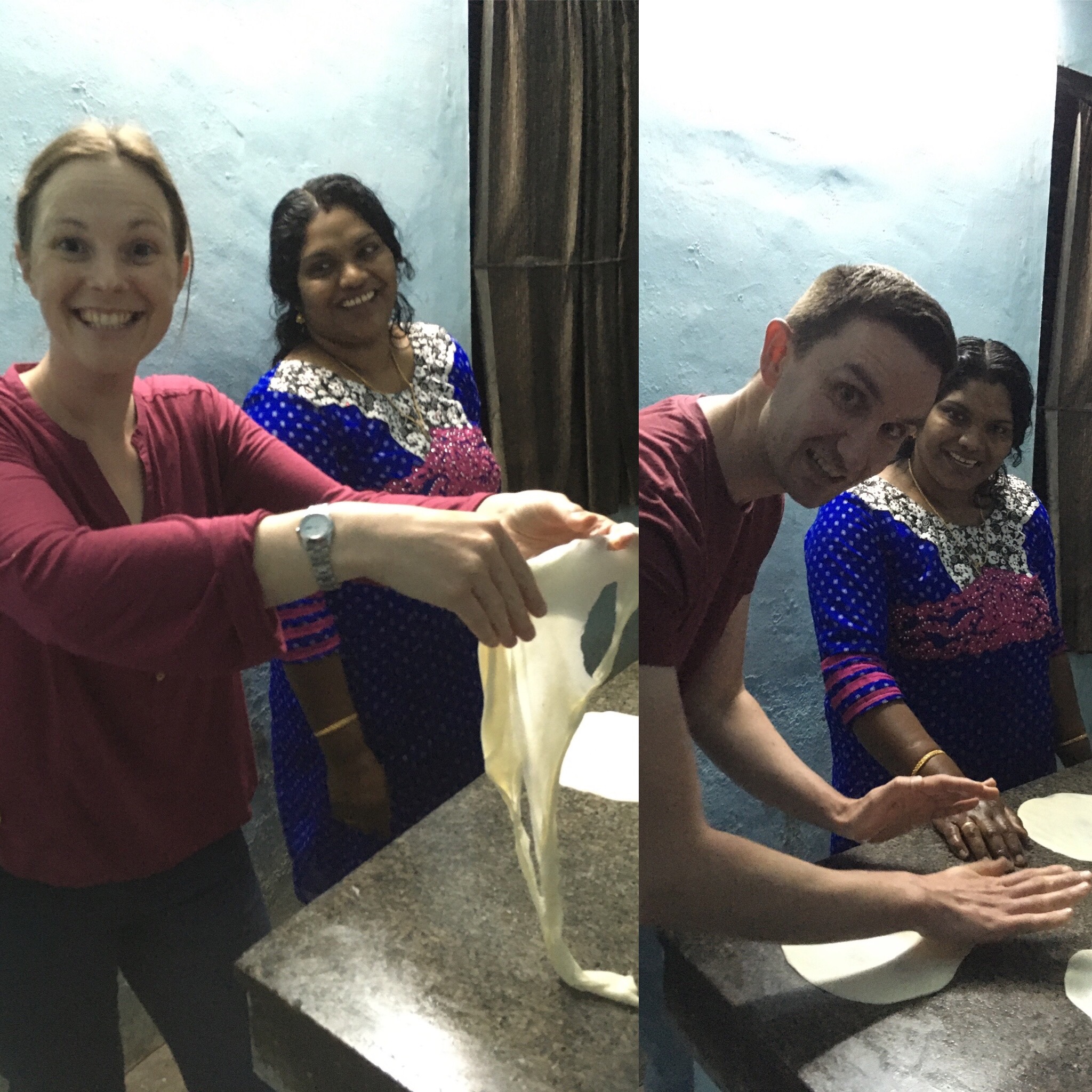
2. Cooking – Having seen the spices growing we wanted to get in on the cooking action. We joined Mrs Sheril in her home to cook up a feast (okra curry,chicken masala,pineapple and coconut curry,Kerala chips,parotta,rice and popadoms). We learnt that curries seem to start with the same basic oil, mustard seeds and curry leaves, a LOT of oil is used in cooking and it’s all such hard work.The meal was delicious.

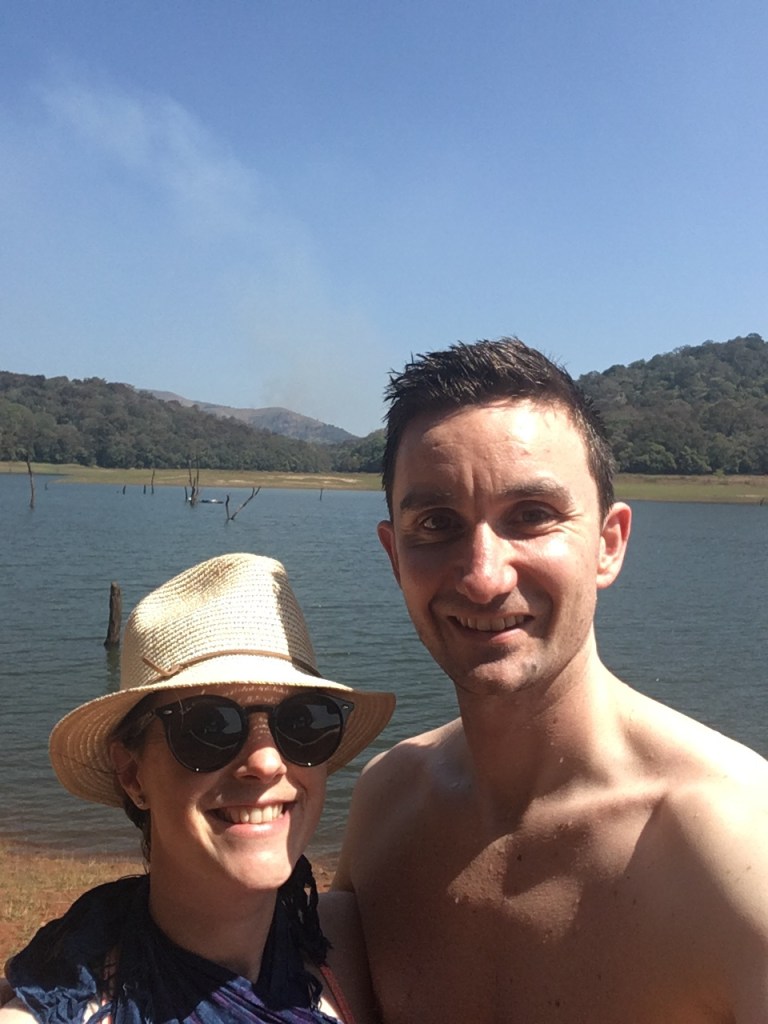
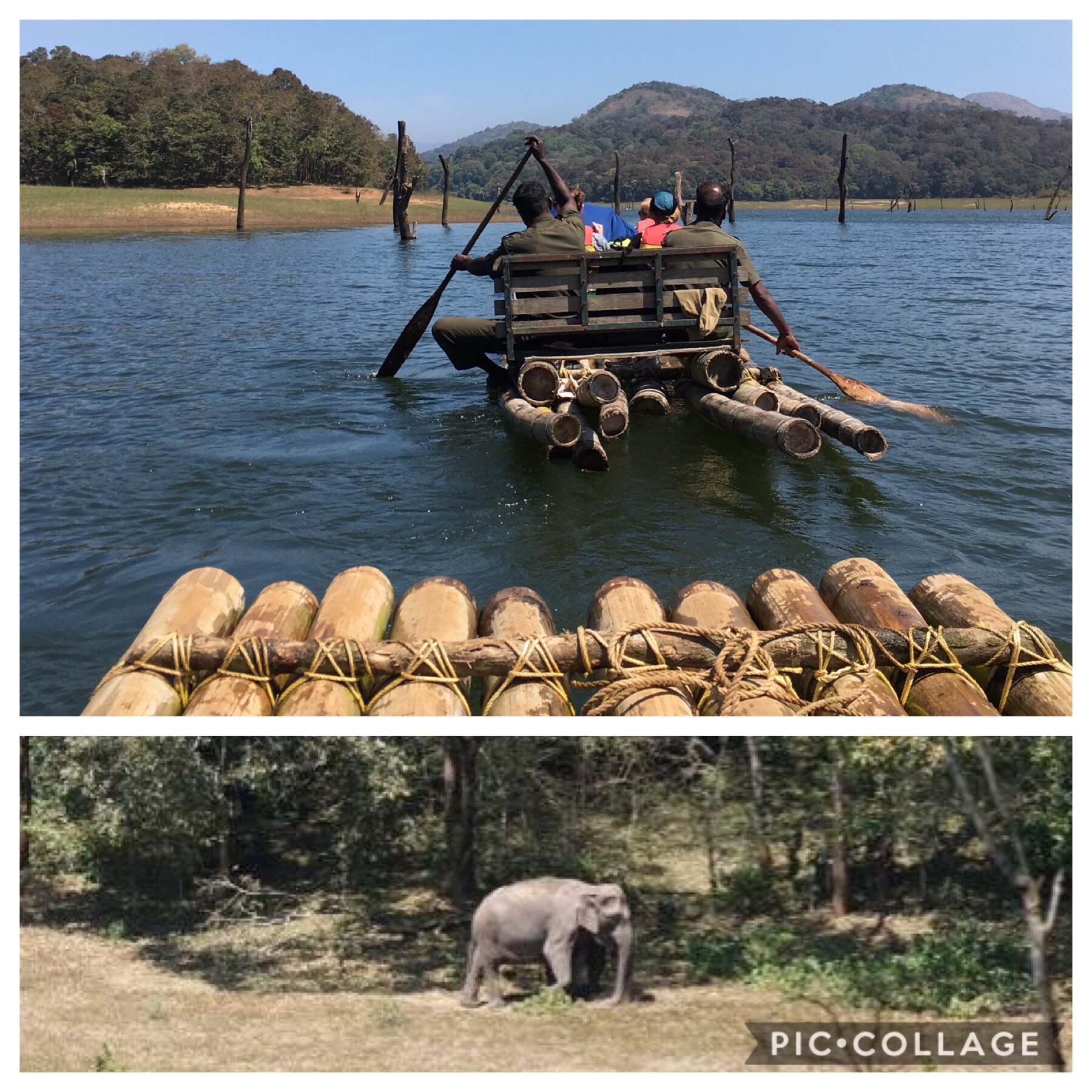
3. Animals – We had a wonderful 4 days in Kumily (we extended as we were enjoying it so much, helped by the roof top pool, if you’re ever in Kumily I’d recommend Chrissies guest house). The guest house was surrounded by forest and we were able to see black monkeys (Langur), giant squirrel (Malabar),fruit bats and numerous species of birds from our terrace. We also had a lovely day in the Periyar national park hiking, swimming and bamboo rafting and we were lucky to see wild Asian elephants and Bison.

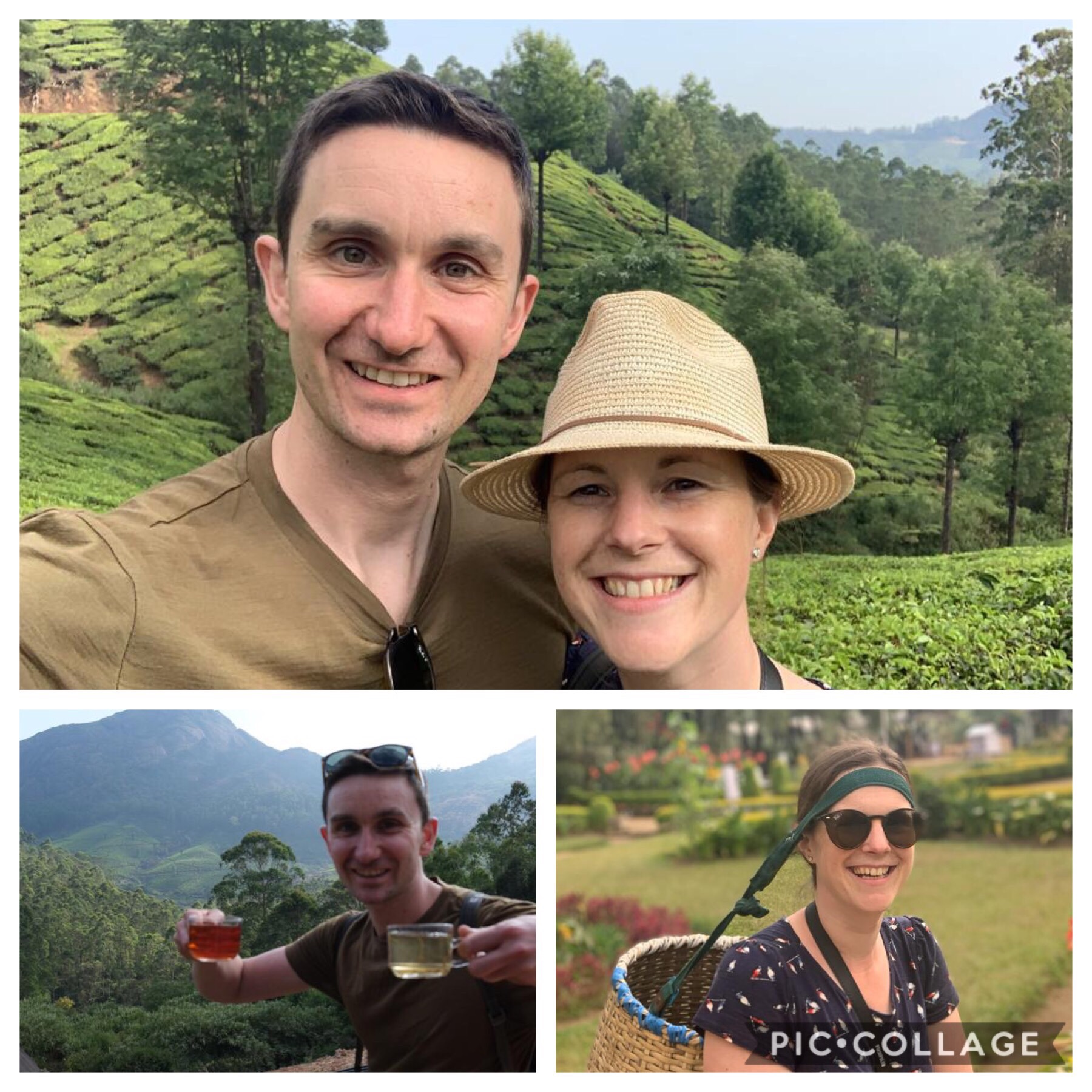
4. Tea – Ah the lovely British institution.Munnar is one of the highest hill top stations and surrounded by luscious green tea plantations.We went on a visit to the Lockhart tea factory, the museum was completely random full of British artefacts and nothing to do with tea, but the factory tour was great watching the processing in action – just like inside the factory but with no regard for health and safety. We sampled the white and black tea at the end and decided it was distinctly average so decided not to buy. Turns out the area doesn’t supply any of our home tea bags.

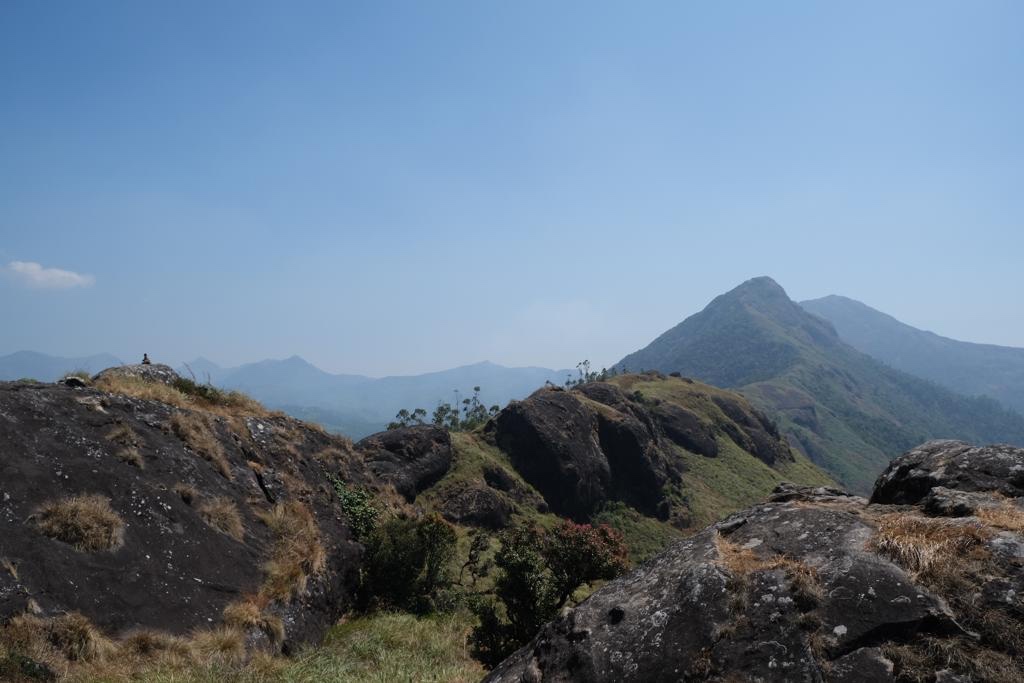
5. Trekking – With the cooler weather in Kumily and Munnar we’ve been able to enjoy some lovely treks in the national park and up high in Munnar for some great views.Turns out Indian guides are very knowledgable but don’t actively volunteer their knowledge. They also like to rest (on one they slept for 1.5hrs at midday whilst we swam and the other read the paper).

Week 1:Varkala to Kumily

Let the adventure begin….

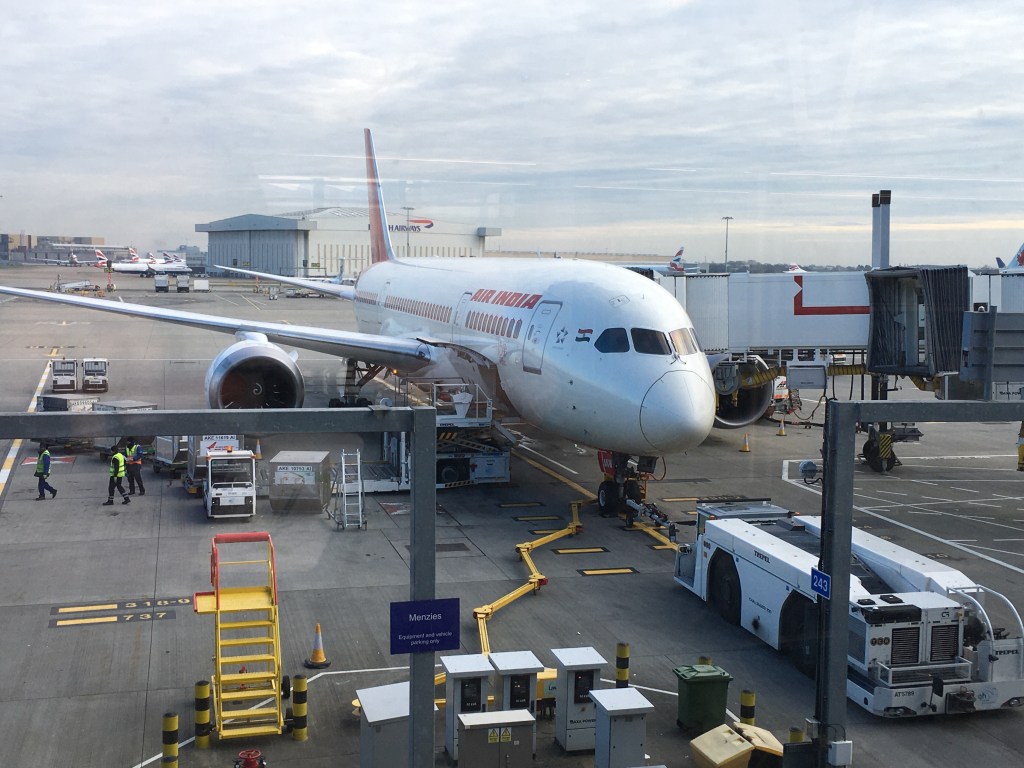
Air India,a sense of what’s to come – bright colourful chairs,chatty people and a smell of curry

Week 1:

Delhi belly -0, Mosquito bites – 3.

Book club this week – The God of small things (Arundhati Roy) – well written,interesting language and descriptions and nice to read whilst in the area,but lacking a gripping story line.

Average daily spend for 2 – £44.

Highlights for this week include:

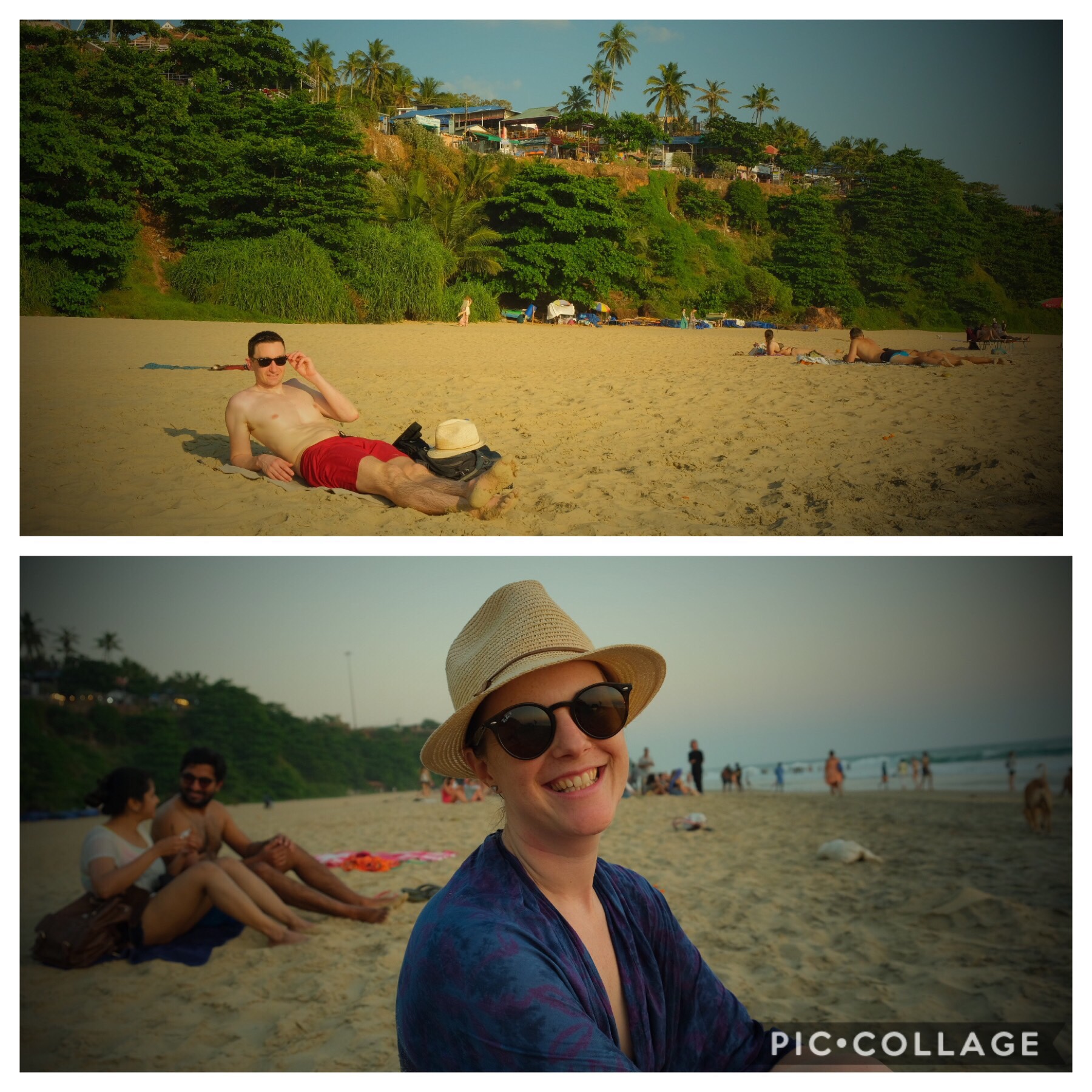
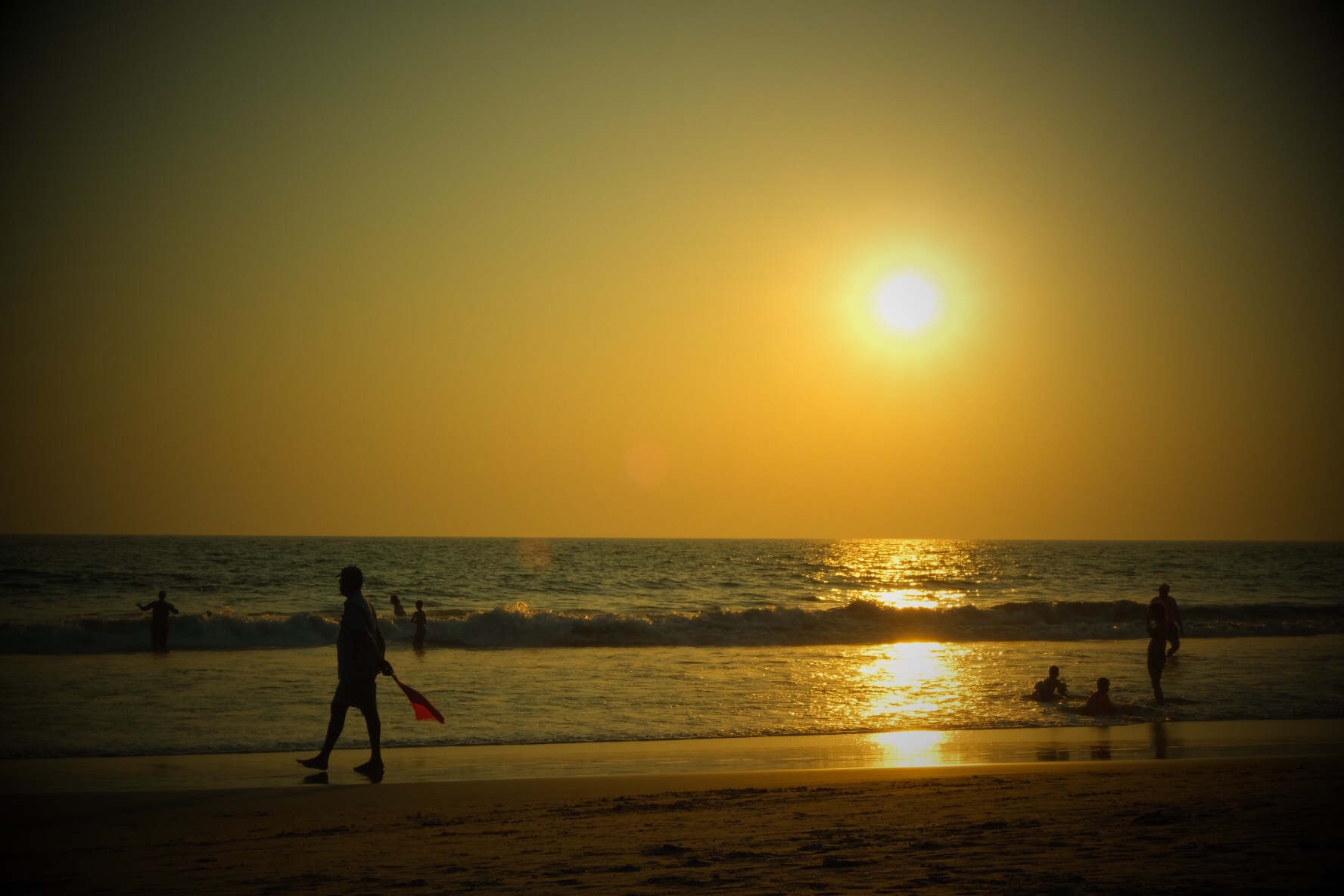
1. Varkala red cliffs and beach. Indian beaches are lively (bells, whistles and machete waving ladies with coconuts) and the Arabian sea is warm but rough.We enjoyed a coconut and early morning, midday and sunset swims.

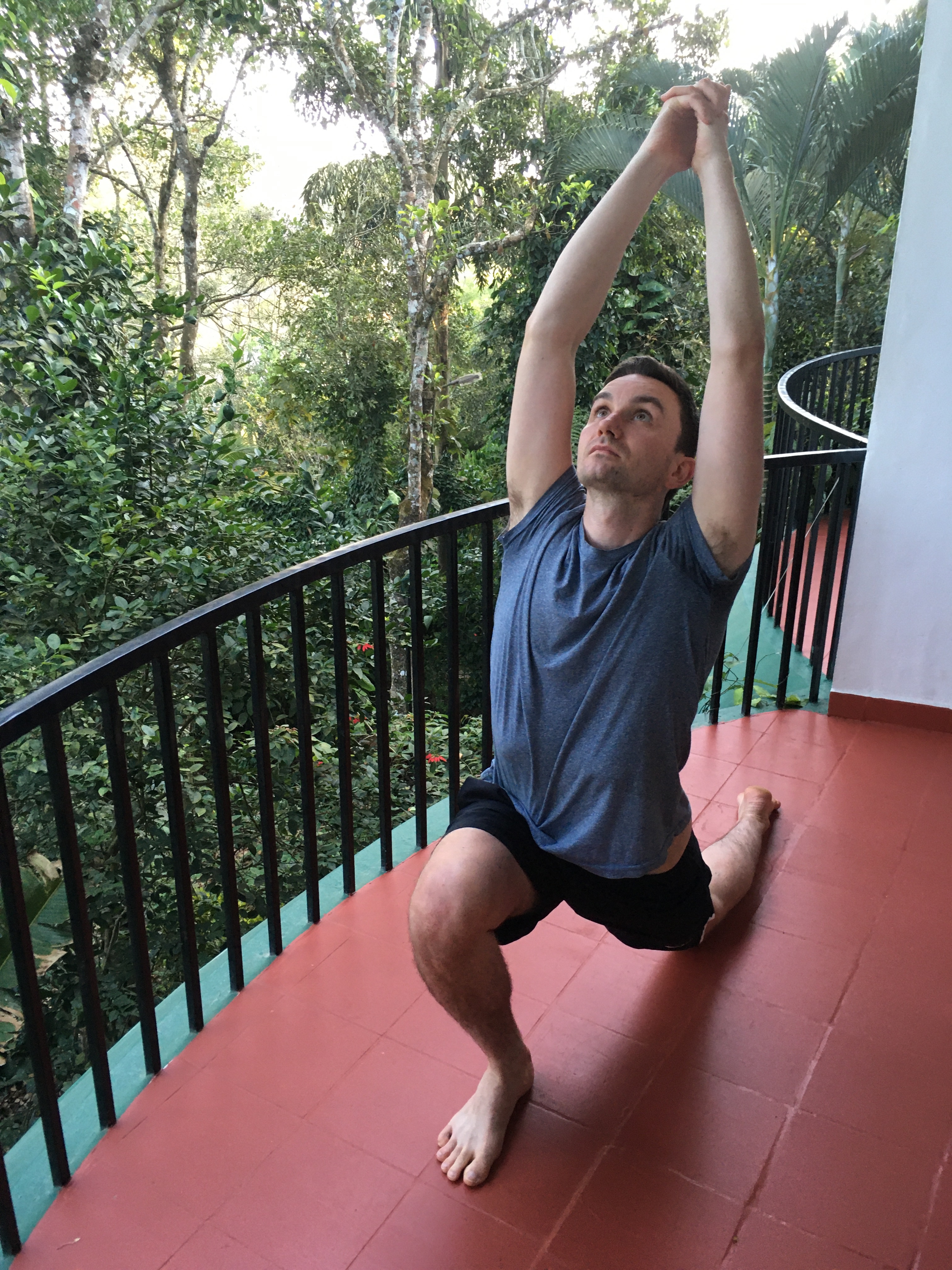
2.Yoga. Morning roof top yoga over looking the sea – what a way to start the day ‘breath deeply, and completely’ “You don’t have to be good at yoga, yoga is good for you”

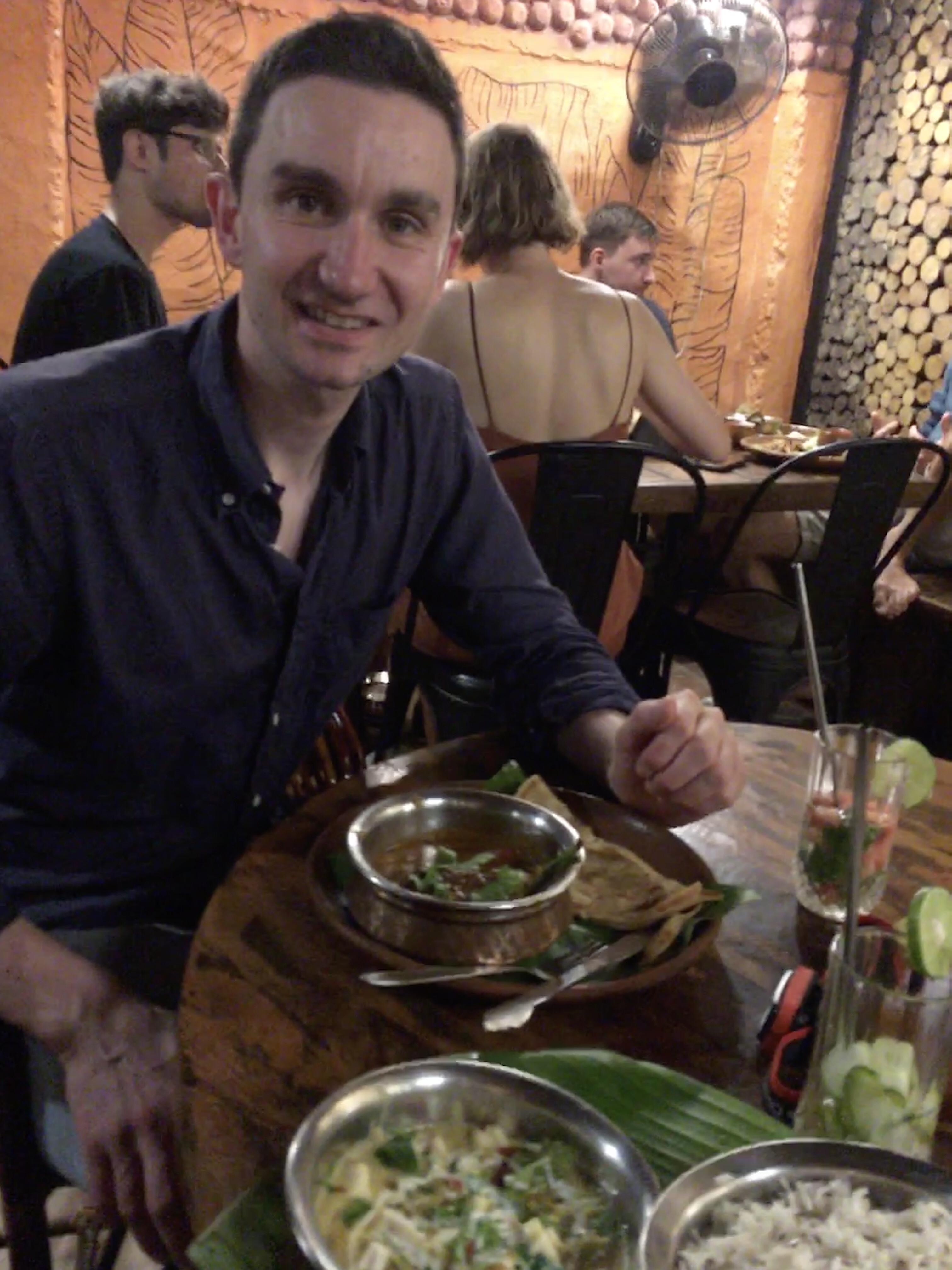
3.Food – Delicious!So much for loosing weight here, we’re loving the flavours and even the spice -byriani,curry,Roti,Dosa.We’re even getting used to curry for breakfast, although a Masala omelette or fruit is most welcome.

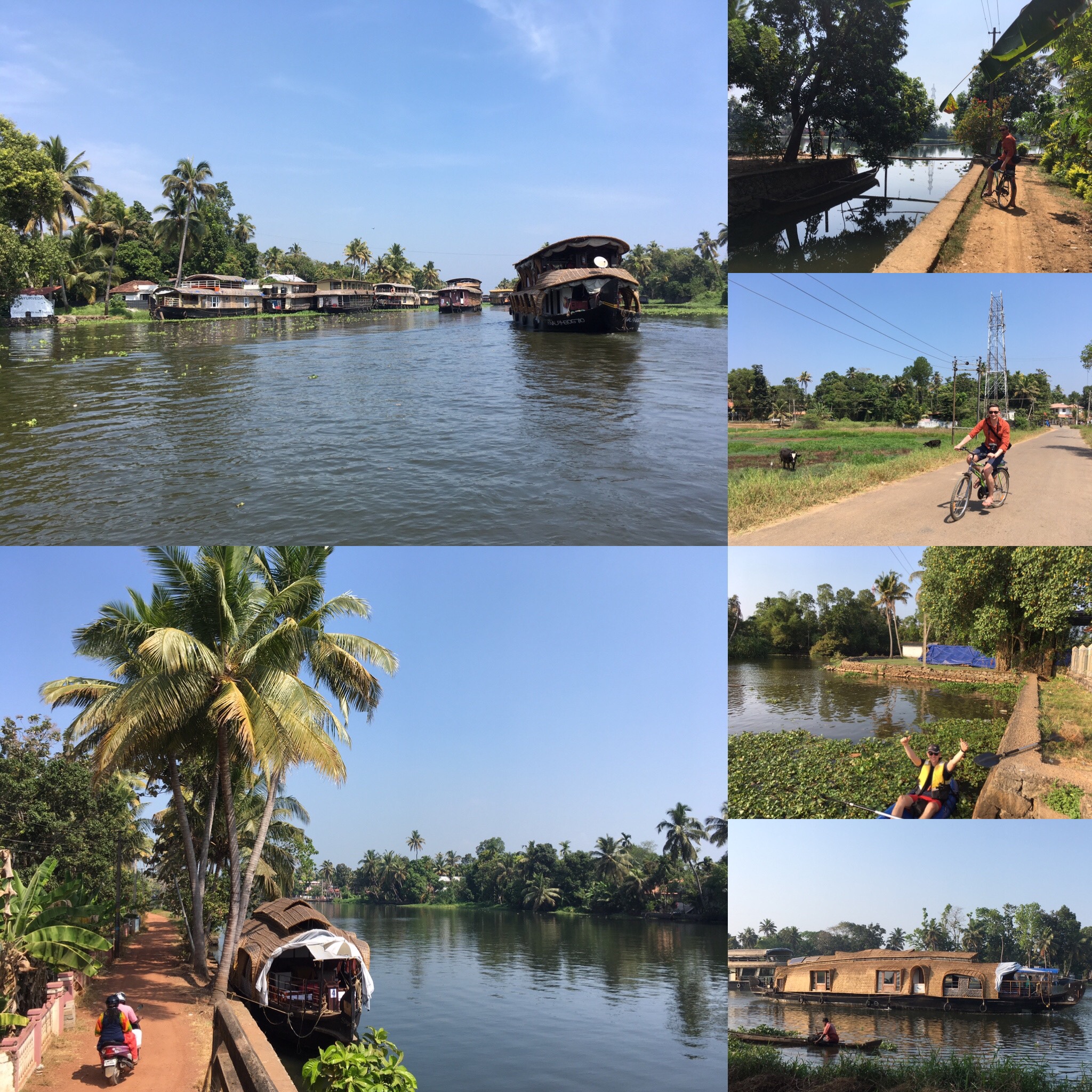
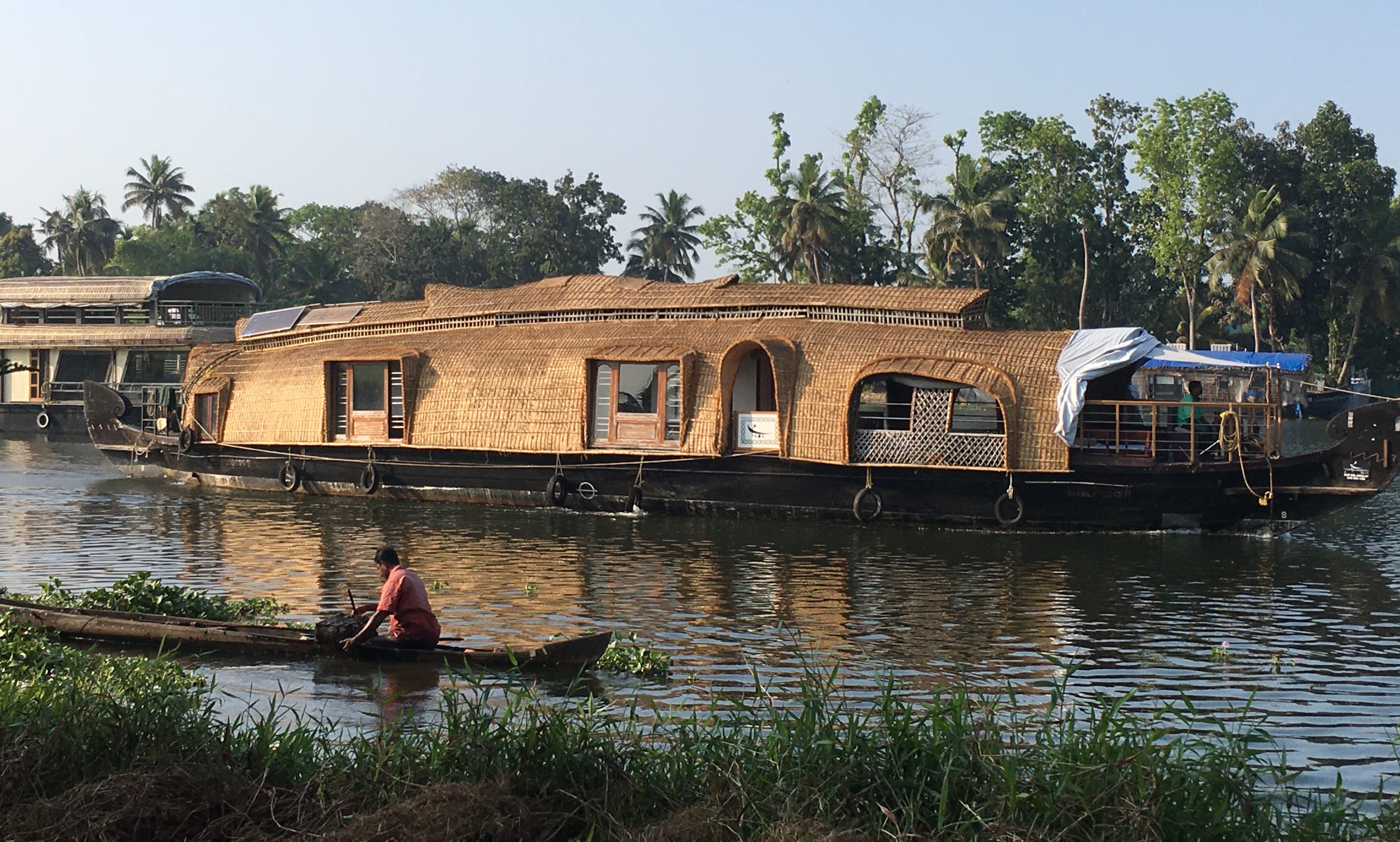
4. Activity around the backwaters.We were lucky to stay at a tranquil home stay on the backwaters where we canoed to our accomodation.We enjoyed our own kayak with background Indian music (from speakers around the religious statues) and spent a morning cycling around the paddy fields – lush.Mark felt we hadn’t done enough exercise so we sweated for 40minutes circuits on the upper level of the homestay much to the amusement of the owners.

5.Sunsets,lush sunsets from the beach in Varkala,from our homestay veranda overlooking the backwaters and from the public bus around tea plantations.

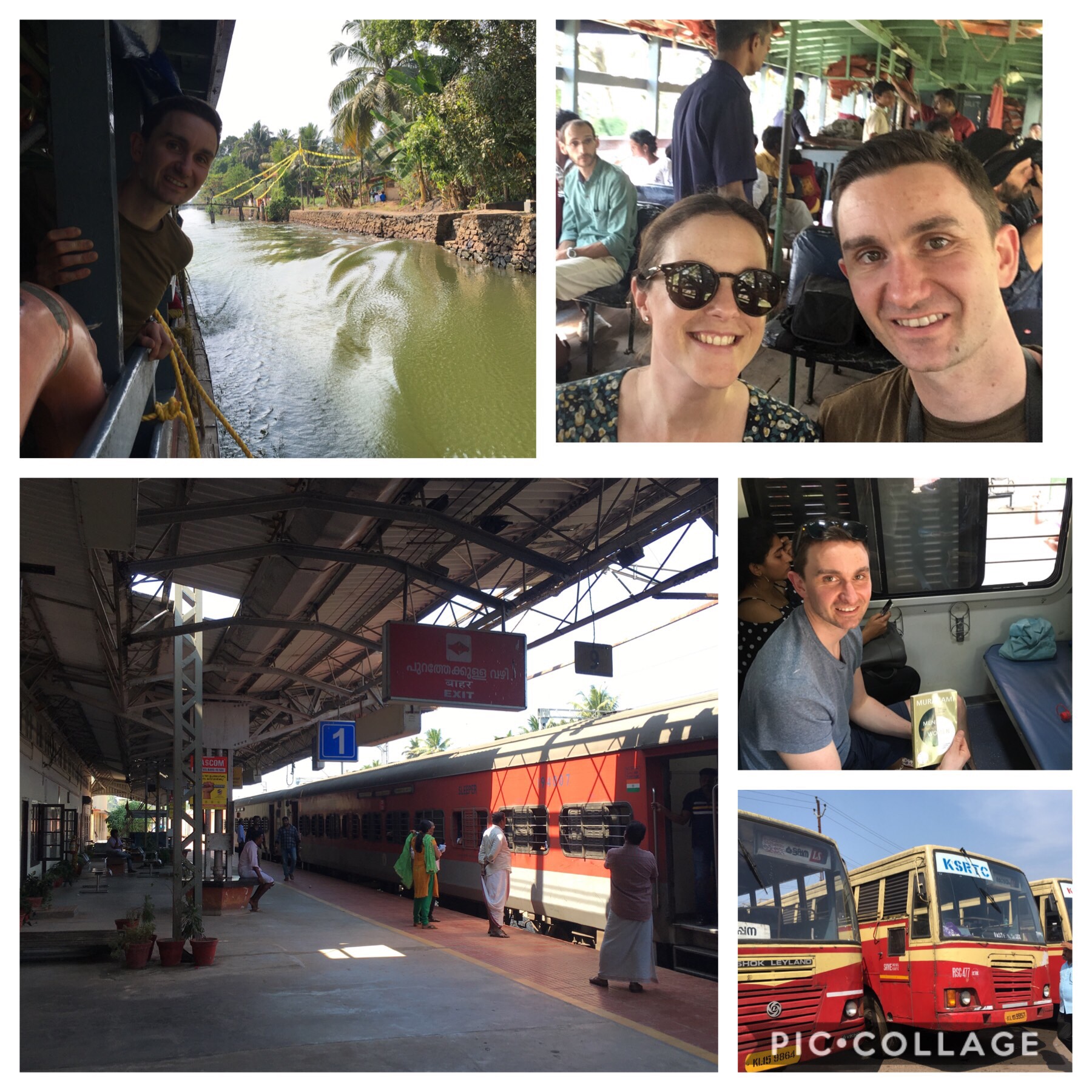
6.Public transport – local bus, tuk-tuk, train and ferry-boat, all with a natural breeze (no windows),and amazingly cheap (56p for a 1.5hr ferry kotyama or £1.53 for 3rd class train from Varkala to Allepey),puts British transport to shame.Mark even managed to buy a Murakami book he’d wanted on the train, bonus.

Design a site like this with WordPress.com
Get started